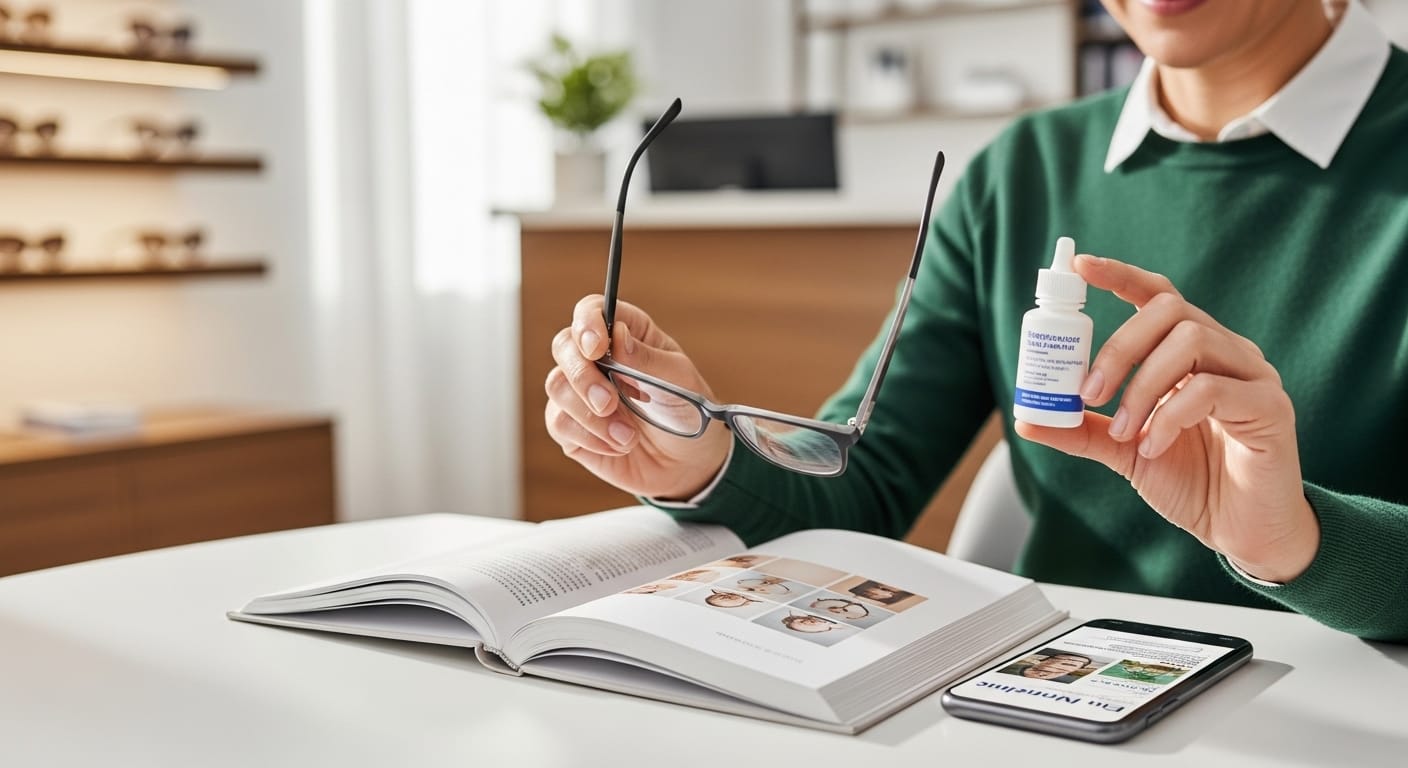
Presbyopia eye drops are getting more attention in 2026 because many adults want clearer near vision without reaching for reading glasses all day. If small print looks blurry, restaurant menus feel harder to read, or your phone needs to move farther from your face, you may already know what presbyopia feels like.
Presbyopia is a normal age-related focusing change. It usually becomes noticeable after age 40. The eye’s natural lens becomes less flexible over time, so nearby objects become harder to focus on. Reading glasses, bifocals, progressive lenses, multifocal contacts, and surgery have long been common options. Now, prescription drops have added another choice for some patients.
Still, presbyopia eye drops are not a magic replacement for every pair of glasses. They may help certain adults with mild to moderate near-vision blur. They may not work well for everyone. They also require a proper eye exam because some people have eye health risks that need attention first.
Why Presbyopia Eye Drops Are Trending in 2026
The conversation around near-vision correction has changed. Many people now spend hours switching between phones, laptops, paperwork, labels, and dashboard screens. That constant near work makes blurry close-up vision more frustrating.
Adults also want flexible options. Some people do not mind readers at home but dislike using them at restaurants, meetings, stores, or social events. Others already wear distance contacts and want better near vision without adding readers on top.
How Presbyopia Changes Near Vision
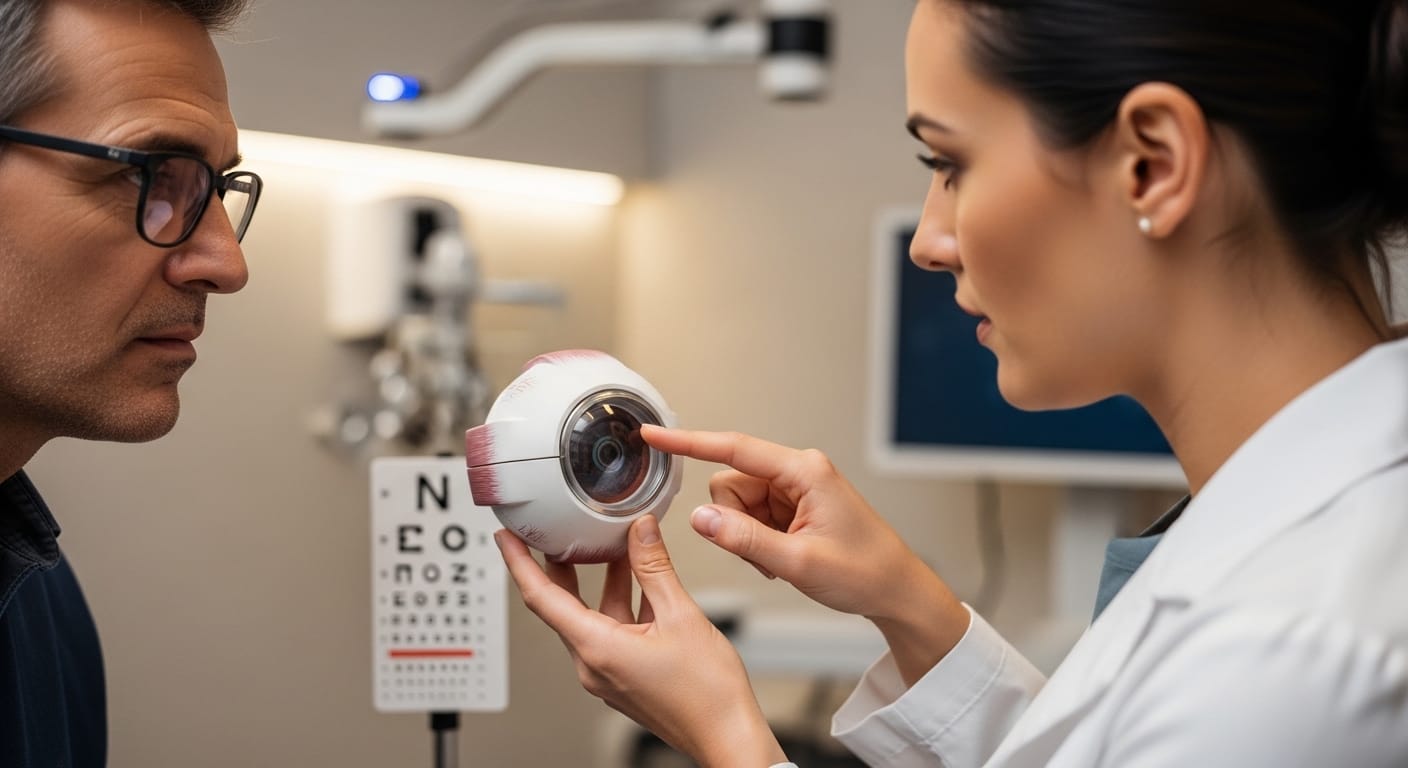
When the eye is young, the lens changes shape easily. That helps you focus from far away to up close. With age, the lens stiffens. The focusing muscles still try to work, but the lens does not respond as well.
This is why presbyopia can feel sudden even though it develops slowly. One year, you may read your phone comfortably. The next year, you may need brighter light, larger text, or longer arm distance. Eye strain and headaches can also appear after extended reading.
Presbyopia eye drops work differently from glasses. Many of these drops use a pupil-constricting effect. A smaller pupil can increase depth of focus, which may make near objects look clearer for a period of time.
Eye Drops Are Not the Same as Reading Glasses
Reading glasses add focusing power. They directly correct near blur. Eye drops do not work the same way. They change how light enters the eye and may improve the range of focus for some people.
That difference matters. A person with strong presbyopia may still need readers. A person with cataracts, retinal disease, dry eye, or uncorrected astigmatism may not get the result they expect. This is why a full exam matters before choosing any option.
Readers who want broader prevention information can visit the site’s guide on common eye problems and how to prevent them.
Who Might Be Interested in Presbyopia Drops?
Adults with early or mild near-vision blur may be most interested. A person may want help reading a menu, checking a phone, reviewing labels, or working at a computer without always grabbing readers.
These drops may also appeal to people who dislike the on-and-off routine of reading glasses. Some contact lens wearers may ask about drops because near tasks can still feel difficult with distance correction.
However, convenience should not replace safety. A patient should discuss health history, medications, eye pressure, retinal history, cataracts, and night-driving needs with an eye care professional.
Night Vision and Driving Need Extra Caution
Some presbyopia drops may cause temporary dim or dark vision, blurred vision, or difficulty in low light. That matters for night driving, evening errands, or work in poor lighting.
People should not drive or operate machinery if their vision is not clear. Anyone who depends on sharp vision at night should ask careful questions before using these drops. This is especially important for patients who commute after dark.
What Patients Should Know Before Asking About Presbyopia Eye Drops
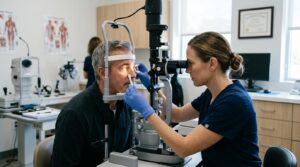
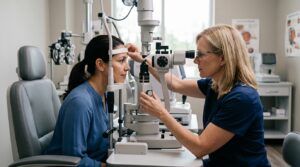
The best starting point is not the pharmacy. It is a comprehensive eye exam. Near blur may come from presbyopia, but other issues can also affect reading comfort. Dry eye, cataracts, diabetes-related eye changes, glaucoma risk, and macular problems can all influence vision.
An eye exam helps confirm the real cause of blurry near vision. It can also help the provider decide whether drops, glasses, contact lenses, or another option makes more sense.
A Comprehensive Eye Exam Comes First
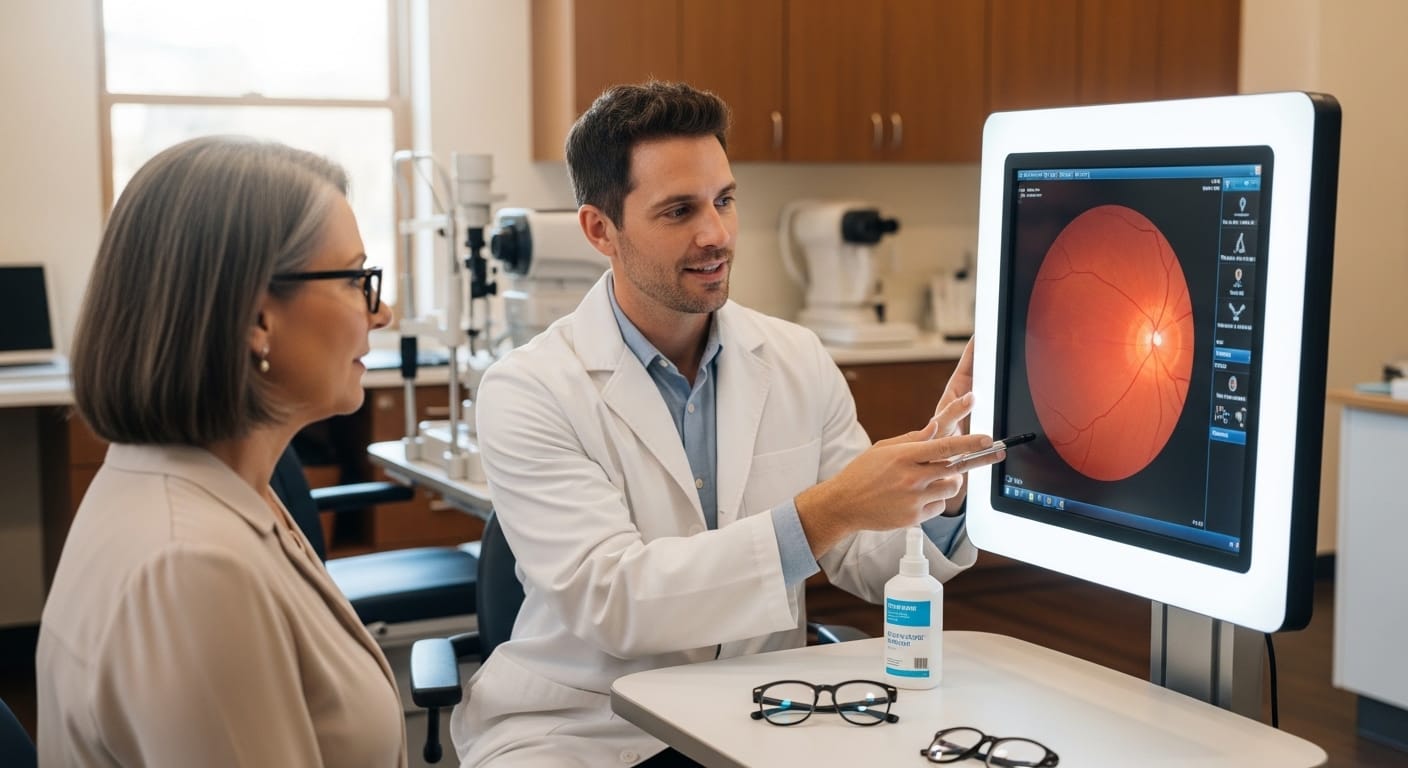
A proper exam may include vision testing, refraction, eye pressure measurement, pupil evaluation, retinal evaluation, and a review of medical history. The goal is not only to sharpen vision. The goal is also to protect eye health.
This matters because rare retinal tear or detachment events have been reported with miotic drops. People with high myopia, previous retinal problems, or symptoms such as new flashes, floaters, or a curtain-like shadow need careful evaluation.
For general service context, readers can review eye care services and the main eye care articles page.
Ask About Side Effects and Daily Routine
Before using presbyopia eye drops, patients should ask practical questions. How long might the effect last? How often can the drops be used? What side effects should be watched? Should the drops be avoided before night driving?
Patients should also ask what to do if they notice eye pain, sudden flashes, new floaters, sudden vision loss, or a shadow in their vision. Those symptoms need urgent medical attention.
Cost and convenience matter too. Some patients may prefer readers because they are simple and inexpensive. Others may like the flexibility of drops for specific situations. The best choice depends on lifestyle, eye health, and expectations.
Presbyopia Treatment Is Becoming More Personalized
The future of near-vision care will likely include more choices, not fewer. Reading glasses will still help many people. Contact lenses may work well for others. Smart lenses, diagnostic contacts, and wearable vision technology may also continue to evolve.
That is why this topic connects naturally with the site’s article on smart lenses and wearable eye technology. Presbyopia drops are part of the same bigger trend: patients want vision solutions that fit real life.
The bottom line is simple. Presbyopia eye drops may help some adults reduce dependence on reading glasses for certain tasks. They may offer convenience, flexibility, and better near focus for the right patient. But they are still prescription medications, not casual over-the-counter shortcuts.
A smart approach starts with an eye exam. Patients should confirm that presbyopia is the real issue, review eye health risks, discuss night-vision needs, and understand possible side effects. With the right guidance, near-vision options can be safer, clearer, and better matched to everyday life.
For additional authority, readers can review the American Academy of Ophthalmology’s overview of presbyopia eye drops at AAO.org and FDA prescribing information for VUITY at FDA.gov.