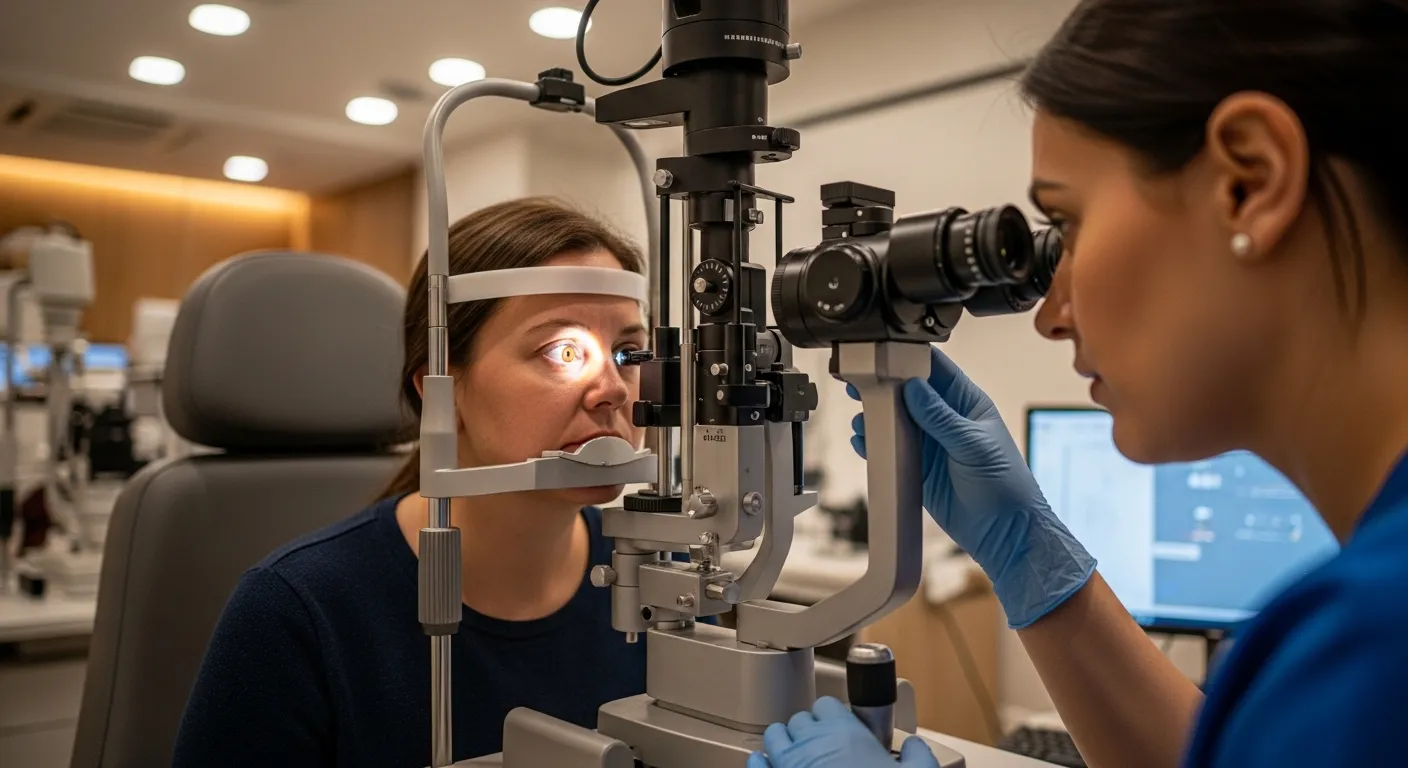
Many people assume they would notice if diabetes were starting to damage their eyes. That sounds logical, but it is often wrong. One of the biggest problems with diabetes-related eye disease is that it can begin quietly. You may still read your phone, drive to work, and function normally while early retinal damage is already developing in the background. That is exactly why diabetic eye exams 2026 remain such an important topic.
For many patients, the danger is not ignoring obvious vision loss. The danger is feeling fine and assuming that means everything is fine. In reality, diabetes can affect the tiny blood vessels in the retina long before daily vision becomes noticeably worse. By the time symptoms finally become obvious, the disease may already be further along than most people expect.
This topic fits naturally with the educational direction of BridgeMill Eye Care. The site already talks about preventive care, early detection, AI-assisted imaging, and remote monitoring. A practical article on diabetes eye exams extends that same message into one of the most important real-world uses of eye care: protecting vision before damage becomes harder to reverse.
If your readers are already exploring topics like AI in Optometry: Early Disease Detection and Personalized Eye Care in 2025 or Teleophthalmology and Remote Eye Care in 2025, then a 2026 guide to diabetic eye exams is a strong next step.
Why Diabetic Eye Exams Matter Even When Vision Seems Fine
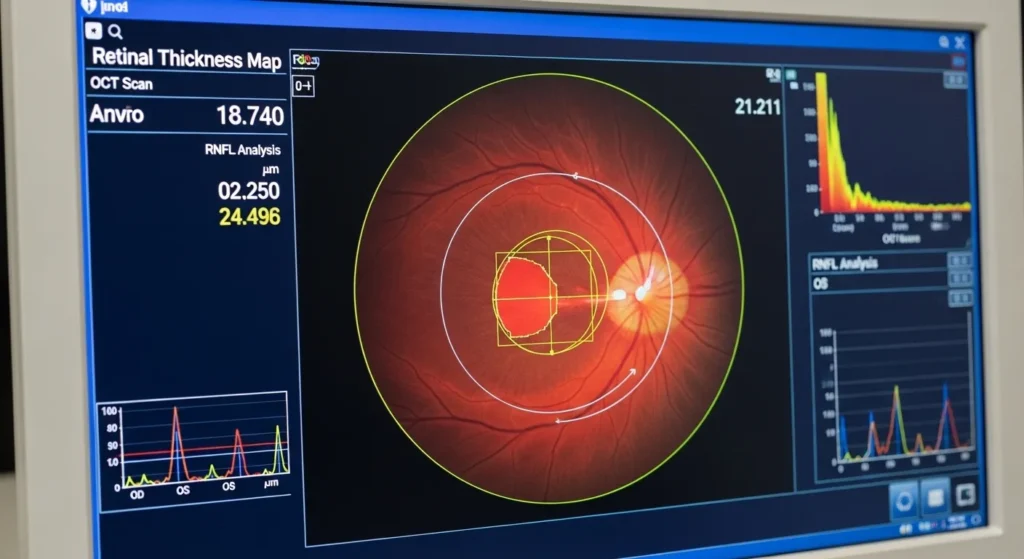
Diabetes does not just affect blood sugar readings. Over time, it can affect blood vessels throughout the body, including the small vessels in the retina. That is why eye care becomes part of overall diabetes care, not a separate issue that only matters after symptoms appear. A person can feel visually normal and still have early retinal changes that need monitoring.
Early diabetic eye disease is often silent
This is the point more patients need to hear clearly. Diabetes-related eye disease can start before a person notices blurry vision, dark spots, or trouble focusing. In practical terms, that means waiting for symptoms is a bad screening strategy. If you only schedule an exam once your eyesight feels “off,” you may already be late to the process.
Clear vision is not the same as a healthy retina
It is easy to confuse visual comfort with retinal health, but they are not the same thing. You can still see well and have early diabetic retinopathy or other diabetes-related changes. That is why patients who say, “I can see fine, so I’m probably okay,” are often using the wrong test. Your own vision is not a reliable substitute for a proper eye exam.
This also connects naturally with BridgeMill’s general preventive content. For readers who need broader background, Common Eye Problems and How to Prevent Them is a useful companion internal link.
Yearly exams catch problems before daily life does
A yearly diabetes eye exam is not just a box to check. It is a chance to find damage early enough to intervene before vision loss becomes harder to prevent. In many cases, the value of the exam is not that the patient already feels a problem. The value is that the doctor may catch something the patient could not reasonably detect alone.
That is also why modern tools matter. Retinal imaging, dilation, and more advanced monitoring methods can help identify subtle changes that would otherwise stay hidden until the condition progresses.
Diabetes raises more than one eye-health risk
When people hear “diabetes and eyes,” they usually think only about diabetic retinopathy. That is the best-known issue, but it is not the only one. Diabetes also raises the risk of other eye problems, which is one more reason regular eye care matters even when vision feels stable.
Retinopathy is not the only problem to watch
People with diabetes face higher risk not only for retinopathy, but also for glaucoma and cataracts. That broader risk matters because it changes how a doctor thinks about eye monitoring. A proper diabetes eye exam is not just about looking for one disease. It is about checking the whole ocular health picture in a patient whose baseline risk is already elevated.
This is one reason the article also fits BridgeMill’s services page so well. The practice already highlights both Diabetic Eye Exams and glaucoma-related care, so the blog topic reinforces what the site already offers instead of drifting into something random.
What Patients Should Actually Do in 2026
The best advice is practical, not dramatic. People with diabetes do not need panic. They need routine. Protecting vision usually comes from consistent monitoring, better follow-through, and understanding that “no symptoms” does not mean “no risk.” In 2026, that still starts with keeping eye exams on schedule.
Build a realistic yearly eye-care routine
The strongest routine is usually the simplest one you can repeat. Keep your annual eye exam on the calendar. Do not wait for blurred vision. Bring an updated list of medications. Mention any recent changes in blood sugar control, pregnancy status, or new health issues. If your doctor recommends more frequent follow-up because of findings or higher risk, treat that timeline seriously.
It also helps to think of the eye exam as part of diabetes management, not separate from it. Blood sugar, blood pressure, and cholesterol control all connect to eye-health risk. The exam matters, but so does the day-to-day management that supports what the doctor sees at each visit.
For readers interested in how technology is improving this process, your internal article on The Future of Eye Exams is a natural next click.
Know what to ask at the next exam
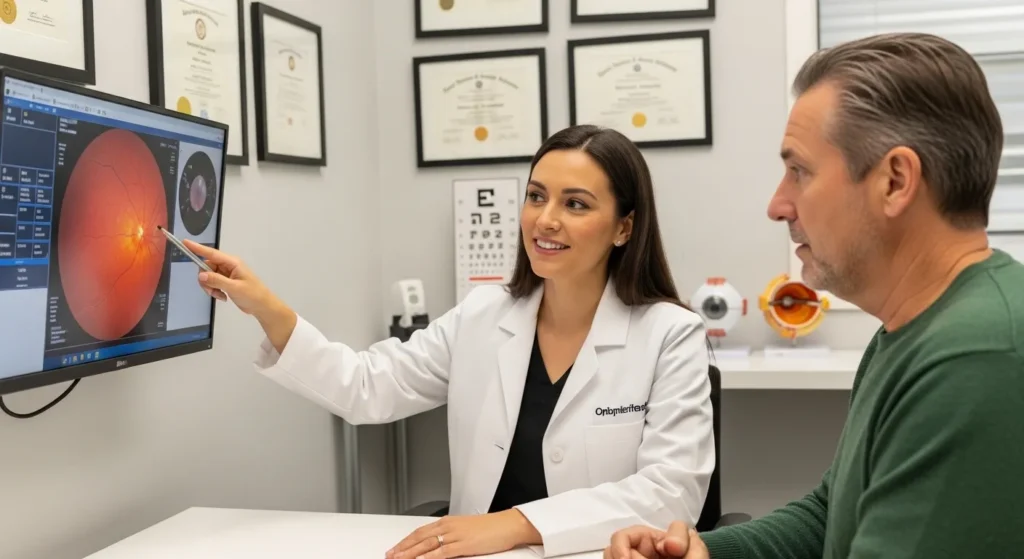
Patients usually get more value from an exam when they ask better questions. A few simple ones can go a long way. Ask whether the retina looks healthy. Ask whether there are any early diabetes-related changes. Ask whether dilation or retinal imaging is recommended at that visit. Ask how often follow-up should happen based on your current risk, not just a generic schedule.
That kind of conversation turns the visit into a more useful long-term plan. It also helps patients stop thinking of the exam as just a prescription check and start seeing it as a preventive health appointment.
Diabetic eye exams 2026 are a strong topic because they speak to a very common blind spot in patient thinking. Many people assume they would know if diabetes were harming their eyes. The truth is less convenient. Sometimes the most important stage for detection is the stage when nothing feels wrong yet.
That is why a diabetes eye exam matters so much. It helps catch silent disease earlier, supports timely treatment when needed, and gives patients a better chance to protect their vision over the long term. For a site like BridgeMill Eye Care, this topic fits naturally because it connects preventive care, chronic disease monitoring, modern imaging, and the practical reality of how vision loss is often prevented rather than simply treated after the fact.
External resources: National Eye Institute: Diabetic Retinopathy and CDC: Promoting Eye Health in Diabetes.