GLP-1 drugs and eye health in 2026 has become one of the most talked-about topics in eye care. That makes sense. Medications like Ozempic, Wegovy, and Rybelsus are now widely used for type 2 diabetes and weight management, so more patients are asking the same question: can these drugs affect vision?
The honest answer is more complicated than a simple yes or no. These medications are not “bad for the eyes” in a broad, one-size-fits-all way. At the same time, eye doctors and medical researchers are paying close attention to a few important issues. One involves a rare optic nerve condition called NAION. Another involves diabetic retinopathy, especially when blood sugar improves quickly. For patients, the real goal is not panic. It is understanding what deserves attention and knowing when an eye exam matters.
This topic fits closely with what we have already covered at Bridgemill Eye Care. If you have read our article on Diabetic Eye Exams in 2026: Why Clear Vision Doesn’t Mean Your Retina Is Fine, you already know that retinal disease can develop silently. That same point matters here. A person can feel that their vision is mostly fine and still have changes that need proper follow-up.
It also connects naturally with our post on AI in Optometry: Early Disease Detection and Personalized Eye Care in 2025, because modern imaging and better screening tools make it easier to spot subtle changes earlier. In other words, the conversation around GLP-1 drugs is not just about medication. It is also about monitoring, timing, and making sure patients do not ignore important symptoms.
Why GLP-1 Drugs and Eye Health Is Trending in 2026
This topic is trending because the number of people taking GLP-1 medications has grown fast, and eye-related questions have grown with it. Patients are hearing about these drugs everywhere. Some use them for diabetes. Others use them for obesity or weight loss. As use increases, even rare complications receive more attention because more people want clear answers about real-world risk.
Why semaglutide gets so much attention in eye care
Semaglutide draws the most attention because it is the active ingredient in several of the best-known GLP-1 medications. That means eye care conversations often mention Ozempic, Wegovy, and Rybelsus specifically. The concern is not that every patient on semaglutide will develop an eye problem. The concern is that certain eye issues have been studied closely enough that both regulators and eye specialists now discuss them much more openly than before.
NAION is rare, but it changed the conversation
One reason this topic feels more urgent now is the growing discussion around NAION, which stands for non-arteritic anterior ischemic optic neuropathy. It is a rare optic nerve problem that can cause sudden vision loss. Patients do not need to memorize the full name. What matters is knowing that sudden or rapidly worsening vision loss is not something to “wait out” at home.
That does not mean people should assume semaglutide will cause this condition. The absolute risk appears low. Still, rare does not mean irrelevant. When a medication is used by a very large number of people, even uncommon events become important to track carefully. That is why more eye doctors now ask about GLP-1 use during intake and medication review.
Diabetic retinopathy still matters even when blood sugar improves
Many patients focus only on the newer headlines and miss the older issue that may matter just as much: diabetic retinopathy. This is especially important for people with existing diabetes-related retinal disease. In some cases, rapid improvement in blood sugar control can temporarily worsen diabetic retinopathy. That does not mean good glucose control is bad. It means the eyes may need closer follow-up during periods of fast metabolic change.
That point is easy to overlook because patients often assume improving diabetes automatically means the eyes are fully protected right away. Real life is not always that neat. Retinal blood vessels can still react to the speed of change, and that is one reason a proper diabetic eye exam stays important even when a patient feels healthier overall.
What patients should pay attention to instead of guessing
The smartest approach is not to guess whether a symptom is medication-related. It is to pay attention to the pattern. Sudden vision loss, a dramatic drop in clarity, a dark area in vision, or quickly worsening eyesight deserves urgent attention. Blurry vision that changes as blood sugar changes can also matter, even if it turns out not to be an emergency.
Patients should also remember that not every vision complaint points to the retina or optic nerve. Sometimes the issue is dry eye, fluctuating tear film, eye strain, or another surface problem. That is why it helps to keep perspective. Symptoms still matter, but the right response is proper evaluation, not self-diagnosis. Our article on Dry Eye in 2026: Why Drops Aren’t Enough is a good reminder that blurry or uncomfortable vision can have more than one cause.
What This Means for Eye Exams, Retinal Monitoring, and Follow-Up
For most patients, the practical takeaway is simple. Do not panic, but do not ignore your eyes either. If you take a GLP-1 medication and you also have diabetes, a baseline eye exam and regular retinal follow-up make a lot of sense. Even for patients without known diabetic retinopathy, it helps to have a doctor document the current condition of the retina and optic nerve. That gives everyone a clearer reference point if symptoms ever appear later.
Why regular diabetic eye exams matter even more now
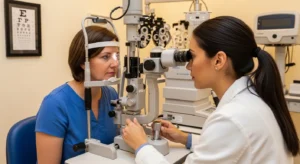
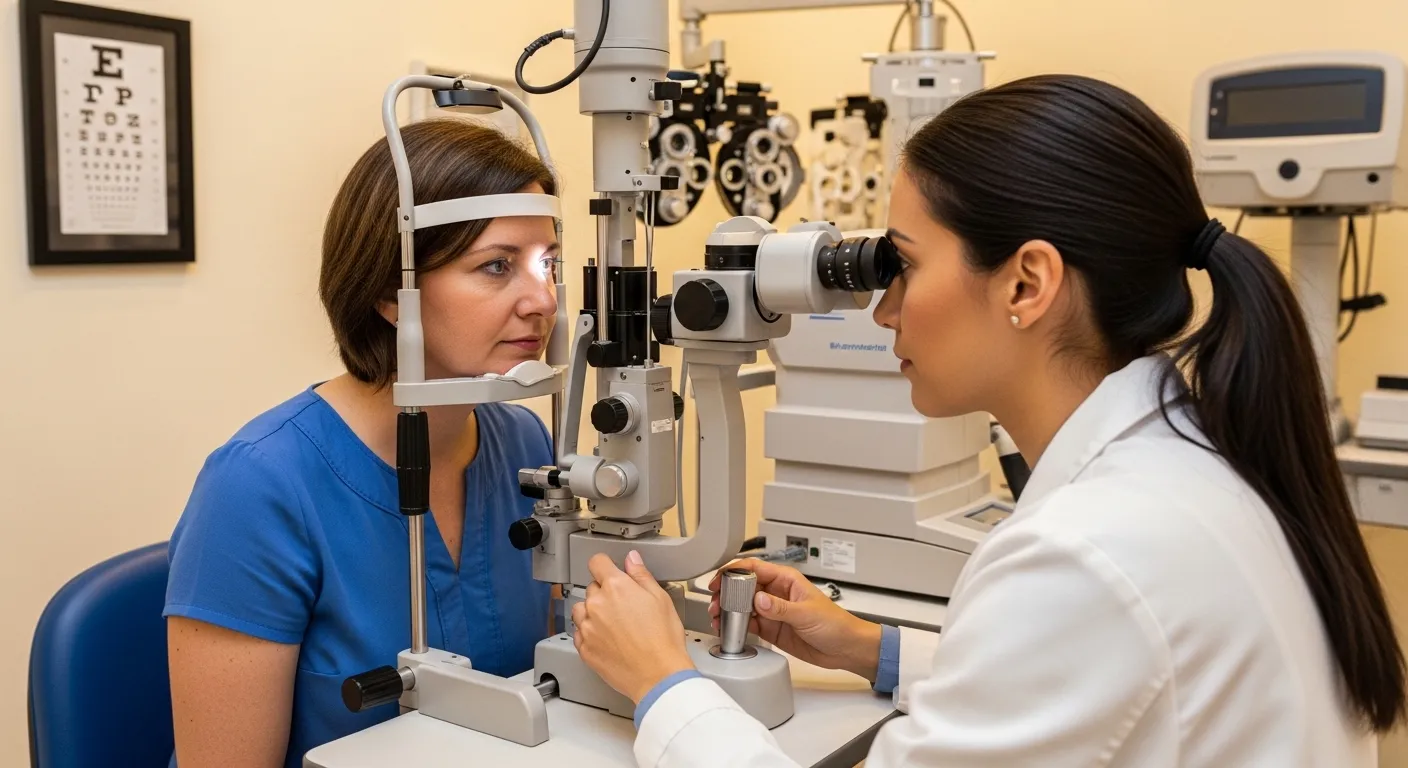
This is where the topic becomes less dramatic and more useful. A strong eye-care plan does not start only after a problem appears. It starts with routine screening. Patients with diabetes can have retinal disease long before they notice it. That is why annual comprehensive eye exams and retinal photography remain so important. A person who takes Ozempic or another GLP-1 drug should not assume the medication replaces the need for eye monitoring. It does not.
That message lines up perfectly with our earlier article on diabetic eye exams. Clear vision does not prove that the retina is fine. In fact, one of the most frustrating parts of diabetic eye disease is how quiet it can be at first. Regular exams help catch changes before they become a crisis.
Modern retinal imaging makes silent changes easier to catch
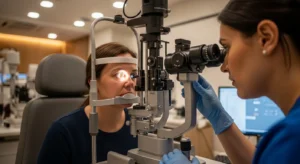
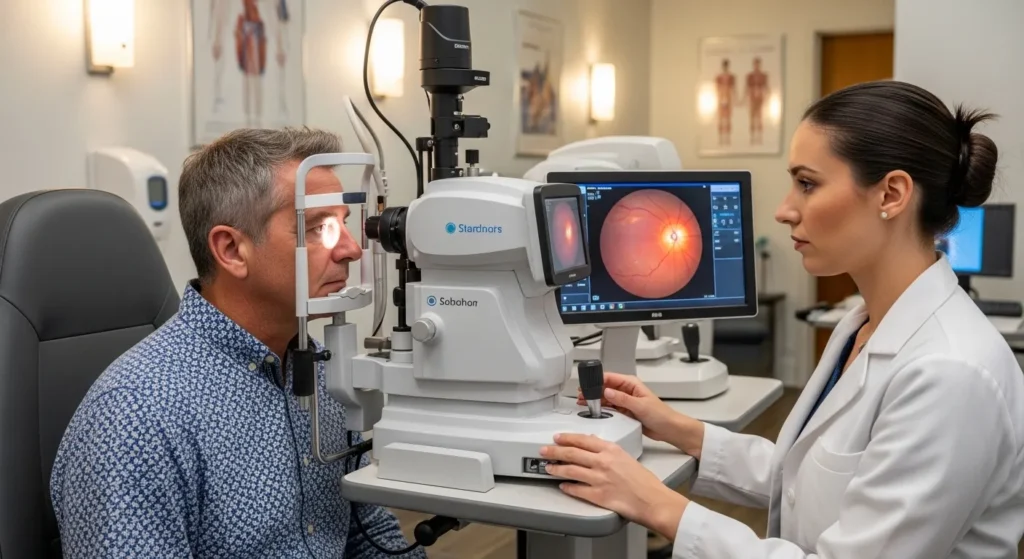
Today’s eye care technology gives doctors a much better look at what is happening beneath the surface. Retinal imaging, OCT, and other diagnostic tools can reveal early changes that patients would never detect on their own. That matters for GLP-1 users because the best protection is not guessing about risk from social media posts or headlines. The best protection is seeing what your own eyes are doing over time.
This is also where newer care models help. Tools discussed in our tele-optometry and AI articles show how eye care is becoming more proactive and data-driven. Better imaging does not eliminate risk, but it does make it easier to track change, compare prior results, and escalate care quickly when necessary.
When to call an eye doctor right away

Some situations should move fast. Sudden vision loss, a new blind spot, rapidly worsening vision, or a major difference between one eye and the other should be treated as urgent. Patients taking semaglutide should not stop their medication on their own unless their doctor tells them to. But they also should not dismiss major changes because they hope the issue will pass by morning.
The more practical mindset is this: urgent symptoms deserve urgent contact with an eye doctor, and medication decisions should be made with the prescribing clinician and the eye care team together. That keeps the response grounded instead of reactive.
The bottom line is straightforward. GLP-1 drugs and eye health in 2026 is a real topic for good reason, but it should be handled with nuance. The concern is not that every patient on Ozempic or Wegovy is headed for an eye emergency. The concern is that some patients may need closer retinal monitoring, better symptom awareness, and faster evaluation when vision changes appear. For patients with diabetes, this is even more important because existing retinal disease can complicate the picture.
A smart plan is simple: keep your medication list updated, tell your eye doctor what you take, stay current with diabetic eye exams, and do not ignore sudden changes in vision. Eye care works best when it is proactive, not delayed. In a topic full of headlines and fear, that remains the most useful advice.
For a patient-friendly outside resource, readers can also review the American Diabetes Association’s diabetes eye health guide, which reinforces the importance of yearly comprehensive eye exams or retinal photography.