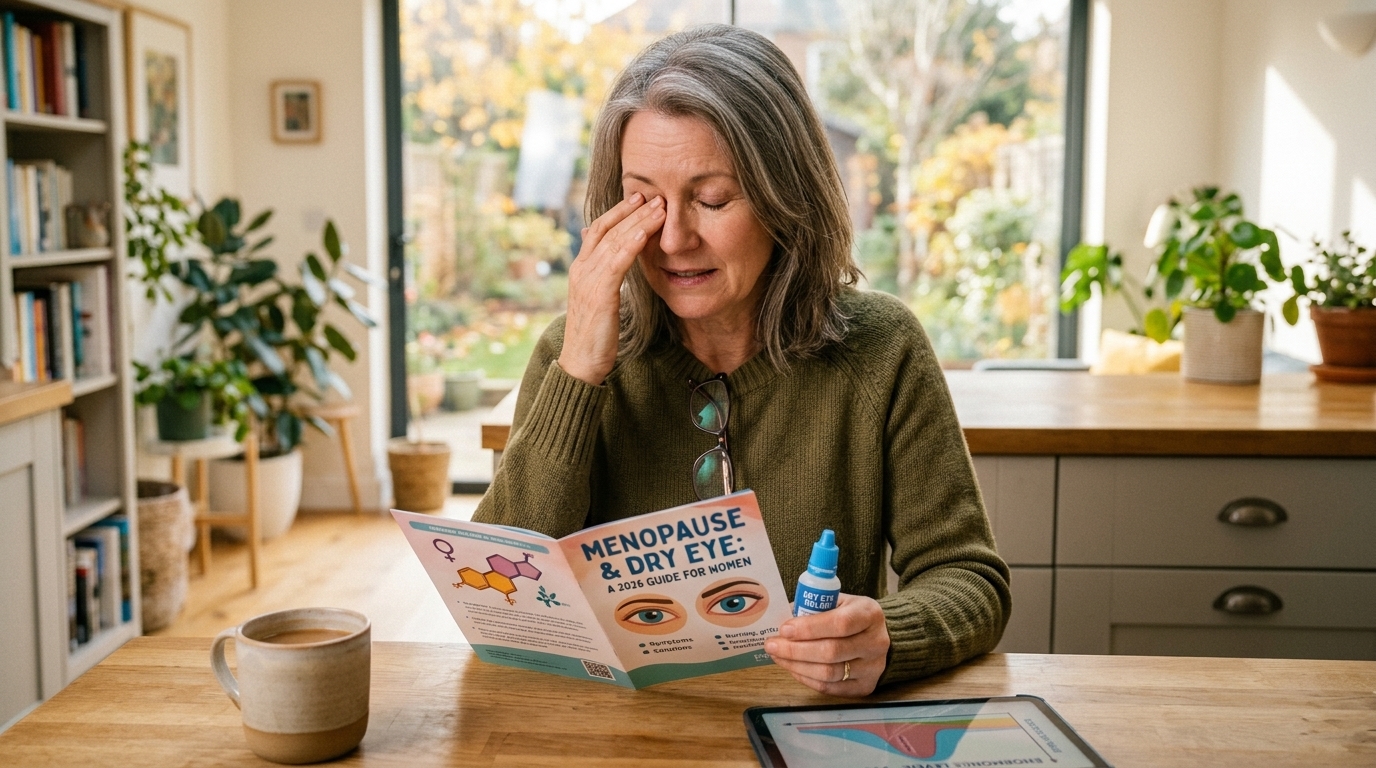
Menopause and dry eye 2026 is becoming a bigger conversation because more women are recognizing that burning, gritty, watery, or tired eyes are not always “just allergies” or “too much screen time.” Hormonal changes can affect the tear film, oil glands, eyelids, and overall eye comfort. For many women, symptoms start during perimenopause, continue through menopause, or become more noticeable after age 40.
Dry eye can feel simple at first. Your eyes may burn at night, feel scratchy in the morning, water unexpectedly, or blur after computer work. You may reach for over-the-counter drops and feel temporary relief, only for the discomfort to return. That cycle can be frustrating, especially when the symptoms interfere with reading, driving, contact lens wear, makeup use, or daily work.
The important thing to understand is that menopause-related dry eye is not imaginary. It is not something women should be expected to tolerate. Hormonal shifts can affect the glands that help stabilize tears. When the tear film becomes unstable, the eyes may feel dry even when they are watering. That is why a proper eye exam matters.
This guide explains why menopause and dry eye 2026 are connected, what symptoms women should watch for, and when it may be time to move beyond basic artificial tears. This article is for educational purposes only and should not replace medical advice from an eye care professional.
Why Menopause and Dry Eye 2026 Are So Closely Connected
Dry eye disease becomes more common with age, and women are affected more often than men. One major reason is hormonal change. During perimenopause and menopause, levels of estrogen, progesterone, and androgens shift. These changes can influence the tear glands, eyelid oil glands, inflammation levels, and the stability of the tear film.
A healthy tear film has multiple layers. The watery layer helps hydrate the eye. The oily layer, produced by the meibomian glands in the eyelids, helps slow tear evaporation. When the oil layer is poor, tears evaporate too quickly. That can cause burning, stinging, redness, fluctuating vision, and the feeling that something is stuck in the eye.
This is one reason artificial tears may not be enough. Drops can add moisture, but they may not fully solve blocked or poorly functioning oil glands. BridgeMill Eye Care’s related article on dry eye treatment in 2026 explains why meibomian gland dysfunction, also called MGD, is such an important part of modern dry eye care.
How Hormonal Changes Can Affect The Tear Film
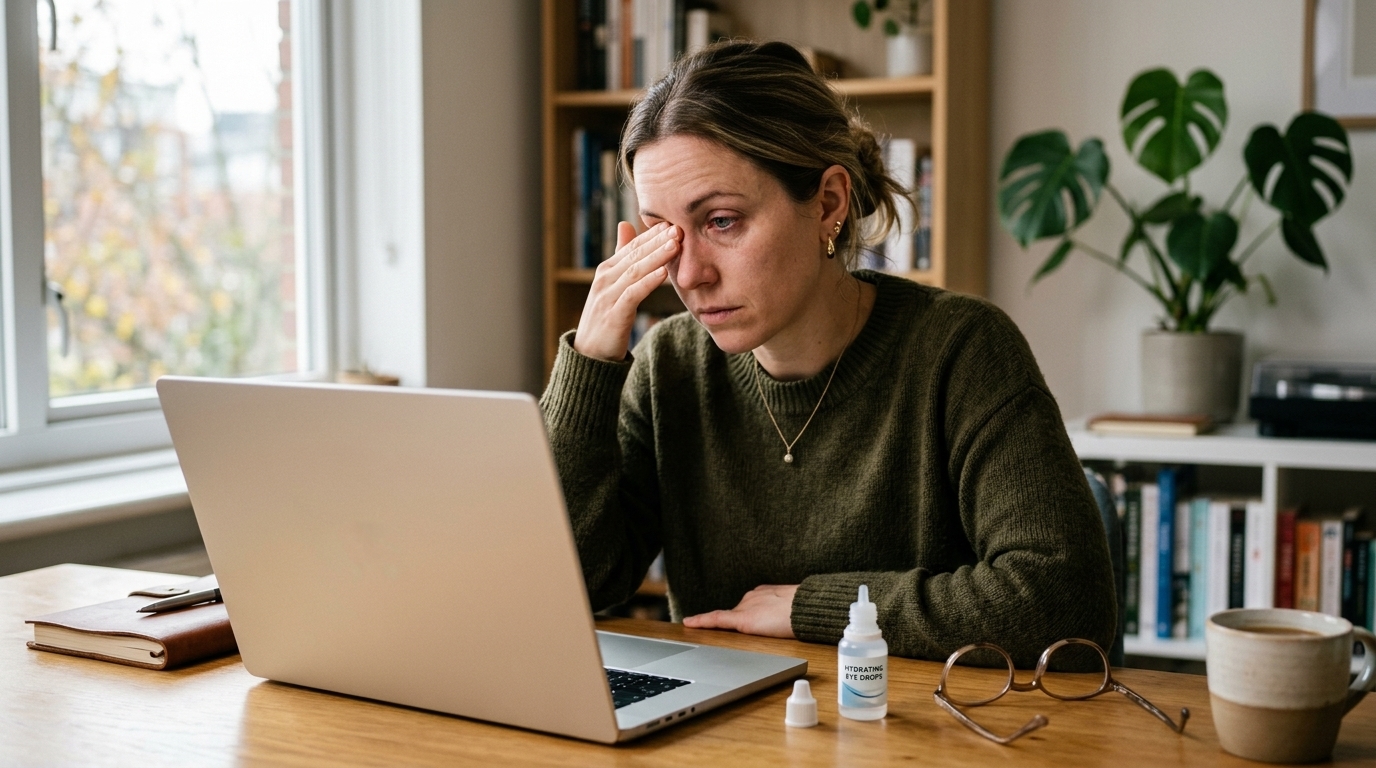
Hormones help influence the glands that support eye surface comfort. When hormone levels change, the eyelids and tear film may not function the same way they did before. The eyes may become more sensitive to wind, air conditioning, fans, smoke, cosmetics, screen use, and contact lenses.
Some women notice symptoms during perimenopause before their periods fully stop. Others notice dry eye after menopause. Symptoms may also fluctuate, which can make the problem confusing. One week may feel manageable, while the next week brings burning, redness, or blurry vision. That inconsistency does not mean the symptoms are not real.
Dry eye can also be mixed with other age-related vision changes. For example, many adults over 40 begin to notice presbyopia, which makes near vision more difficult. BridgeMill Eye Care’s article on presbyopia eye drops in 2026 may be helpful for patients who are also struggling with reading vision changes.
Burning And Gritty Eyes Are Not Always Allergies
Many women assume itchy, watery, or irritated eyes are caused by allergies. Allergies can definitely contribute, especially during pollen season, but they are not the only explanation. Dry eye can also cause watery eyes because the surface becomes irritated and triggers reflex tearing.
The problem is that reflex tears are often poor-quality tears. They may run down the face but fail to protect the eye surface for long. That is why someone can say, “My eyes are watering, so how can they be dry?” The answer is that dry eye is often about tear quality and stability, not just tear quantity.
Contact Lens Discomfort May Be A Warning Sign
Contact lens wear may become harder during hormonal changes. Lenses that once felt comfortable all day may start feeling dry by afternoon. Vision may blur, lenses may move more, or eyes may look red after removal. Some patients start wearing glasses more often because contacts no longer feel reliable.
This does not always mean contact lenses are no longer an option. It may mean the tear film needs treatment, the lens material needs to change, or the wearing schedule needs adjustment. BridgeMill Eye Care’s guide on bifocal and multifocal contact lenses is useful for adults who need both comfort and clear vision at multiple distances.
Daily Habits That Can Make Menopause-Related Dry Eye Worse
Menopause may be the underlying trigger, but daily habits can make dry eye symptoms worse. Long screen sessions are one of the biggest factors. When people use phones, computers, and tablets, they tend to blink less often and less completely. Less blinking means less oil spreads across the eye surface. Over time, that can worsen evaporation and irritation.
Indoor air can also be a problem. Air conditioning, heating systems, ceiling fans, car vents, and dry office environments can pull moisture away from the eyes. Makeup, eyelash extensions, certain skin care products, and poor lid hygiene may also irritate the eyelids or block oil glands.
Medications can contribute too. Some antihistamines, antidepressants, blood pressure medications, decongestants, and hormone-related treatments may worsen dryness for some patients. Never stop a prescribed medication without speaking to your doctor, but do mention medication use during your eye exam.
Screens Can Turn Mild Dryness Into Daily Frustration
Screen use does not cause menopause, but it can make menopause-related dry eye feel much worse. If you work on a computer all day and then use your phone at night, your eyes may not get enough normal blinking time. That can lead to burning, heavy eyelids, headaches, and blurry vision that clears after blinking.
Simple habits can help. Look away from the screen regularly, blink fully, avoid aiming fans or vents toward your face, and keep your monitor slightly below eye level when possible. BridgeMill Eye Care’s article on how to prevent digital eye strain offers more practical tips for screen-heavy routines.
When Women Over 40 Should Schedule A Dry Eye Evaluation
Women over 40 should consider a dry eye evaluation when symptoms become frequent, disruptive, or resistant to basic drops. Occasional irritation after a long day may happen, but ongoing burning, gritty eyes, redness, contact lens intolerance, watery eyes, or fluctuating vision should be checked.
A dry eye evaluation may include a review of symptoms, medical history, medications, screen habits, contact lens use, eyelid health, tear quality, and meibomian gland function. The goal is to identify what type of dry eye is present. Some patients have mostly evaporative dry eye from poor oil production. Others have reduced tear production, inflammation, allergy overlap, or a combination of factors.
This matters because treatment should match the cause. Artificial tears may help mild symptoms, but moderate or long-term dry eye often needs a more complete plan. That plan may include eyelid hygiene, warm compresses, prescription drops, anti-inflammatory treatment, allergy management, nutritional guidance, contact lens changes, or in-office therapies for meibomian gland dysfunction.
Treatment Is More Than Buying Stronger Eye Drops
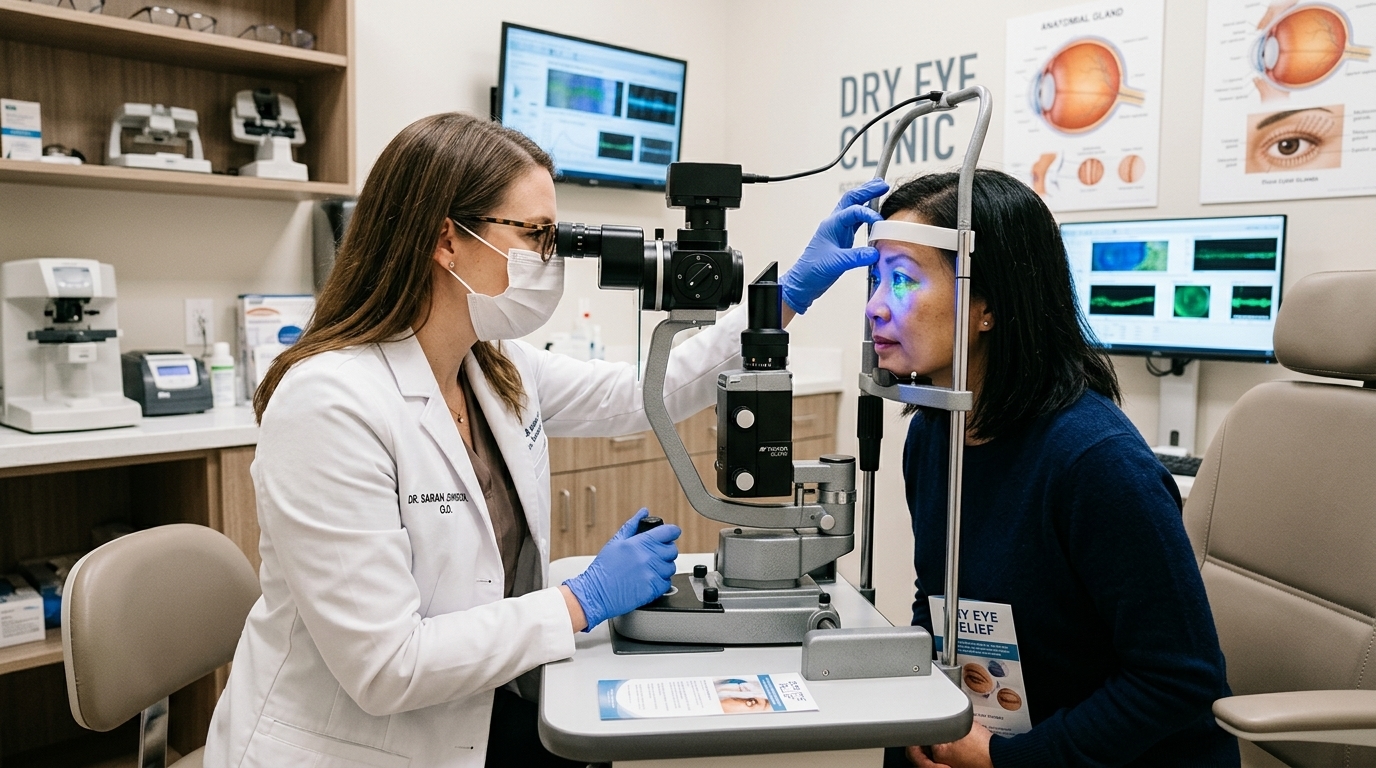
One common mistake is trying drop after drop without understanding the cause. Some drops are helpful. Others may contain preservatives that irritate sensitive eyes when used too often. Some patients need lipid-based tears, while others need medication to reduce inflammation. Some need treatment for blocked oil glands before any drop can work well.
Modern dry eye care is more targeted than it used to be. If the glands are blocked, the eyelids need attention. Inflammation is driving symptoms, inflammation must be addressed. If screen habits are part of the problem, the treatment plan should include environmental and behavior changes. Contact lenses are making symptoms worse, the lens type or schedule may need to change.
Patients should also understand that dry eye is often managed, not instantly cured. The goal is better comfort, more stable vision, healthier eyelids, and fewer symptom flare-ups. For many women, that takes consistency and follow-up.
Red-Flag Symptoms That Need Prompt Eye Care
Some symptoms should not wait. Schedule prompt eye care if you have significant eye pain, sudden vision loss, light sensitivity, thick discharge, a white spot on the cornea, severe redness in one eye, or symptoms after sleeping in contact lenses. These may point to infection or another serious condition.
The bottom line is clear. Menopause and dry eye 2026 are connected because hormonal changes can affect tear quality, oil gland function, inflammation, and eye surface comfort. Women should not ignore burning, gritty, watery, or blurry eyes just because the symptoms seem common.
If drops only help for a short time, if contact lenses are harder to wear, or if screen use makes your eyes miserable, it may be time for a full dry eye evaluation. With the right diagnosis and treatment plan, many women can improve comfort, protect their eye surface, and stop treating dry eye like something they simply have to live with.