Thyroid eye disease 2026 is becoming a more important topic because patients now have more awareness, better imaging, and more treatment conversations than in the past. Thyroid eye disease, often linked with Graves’ disease, can affect the tissues around the eyes. It may cause bulging eyes, dry or gritty eyes, eyelid swelling, eye pressure, light sensitivity, and double vision.
For many people, the first signs feel confusing. One eye may look more open than the other. The eyes may feel dry even when they water. Photos may show a wider-eyed appearance. Reading, driving, or working on a screen may become harder because the eyes do not line up comfortably. Some patients also feel pressure behind the eyes or notice swelling around the lids.
The good news is that thyroid eye disease is no longer a condition patients have to ignore until symptoms become severe. In 2026, eye care providers can monitor symptoms, measure eye changes, coordinate with thyroid specialists, and discuss treatment options based on severity.
This article is for educational purposes only and should not replace medical advice from an eye care professional or physician. Sudden vision loss, new double vision, severe eye pain, or rapid eye bulging should be checked urgently.
Why Thyroid Eye Disease 2026 Deserves More Attention
Thyroid eye disease happens when the immune system affects tissues around the eyes. It can involve muscles, fat, eyelids, tear film, and the optic nerve area. The condition often appears in people with Graves’ disease, but eye symptoms may not always match thyroid symptoms perfectly. Some patients notice eye problems before they understand what is happening with their thyroid.
That mismatch can delay care. A person may blame allergies, dry eye, aging, fatigue, or screen time. Those factors can cause eye discomfort too, but they do not explain every case of eye bulging, eyelid retraction, or double vision. This is why a proper eye exam matters when symptoms look unusual or do not respond to basic drops.
For a broader overview of symptoms, the National Eye Institute explains that Graves’ eye disease can cause bulging eyes, dry or irritated eyes, puffy eyelids, eyelid retraction, double vision, light sensitivity, eye pain, and trouble moving the eyes. Readers can review the official patient guide here: National Eye Institute guide to Graves’ eye disease.
Bulging eyes and eyelid changes can be early clues
One of the most recognizable signs is proptosis, often described as bulging eyes. This happens when swelling and tissue changes behind the eye push the eye forward. Some patients notice this in the mirror. Others notice it in photos. The change may appear mild at first, but it can become more obvious over time.
Eyelid retraction can also happen. The upper eyelid may sit higher than usual, showing more of the white part of the eye. The eyes may look startled or wide open. When eyelids do not close fully, the eye surface can dry out overnight. That can lead to burning, grittiness, redness, watering, and morning irritation.
BridgeMill Eye Care already has helpful related articles on dry eye treatment in 2026 and safe artificial tear use after eye drop recalls. Those are useful internal links because thyroid eye disease can create dry eye symptoms, but the cause may require more than ordinary lubrication.
Dryness can happen even when the eyes water
Many patients assume watery eyes cannot be dry eyes. That is not always true. When the eye surface feels exposed or irritated, it may water as a reflex. Those tears may not stay stable long enough to provide lasting comfort. This can create the odd mix of burning, watering, blurry vision, and dryness at the same time.
Artificial tears may help mild irritation, but they should not become a substitute for an eye exam when symptoms look unusual. If one eye looks larger, the eyelids change position, or double vision develops, the problem may go beyond routine dry eye.
Double vision should not be ignored
Double vision can happen when swelling affects the muscles that move the eyes. The eyes may no longer point in exactly the same direction. Some people notice double vision only when looking to the side, up, or down. Others notice it while driving, reading, walking downstairs, or looking straight ahead.
New double vision deserves prompt evaluation. It can affect balance, depth perception, driving safety, and daily confidence. It may also help the eye doctor judge whether thyroid eye disease is active, stable, mild, or more advanced.
New treatment conversations are changing patient expectations
In the past, many patients were told to wait until the disease became inactive before considering surgery for lasting changes. Some patients still need surgery, prisms, lubrication, steroids, or other management depending on the case. However, treatment conversations have changed because targeted therapies now exist for some patients with thyroid eye disease.
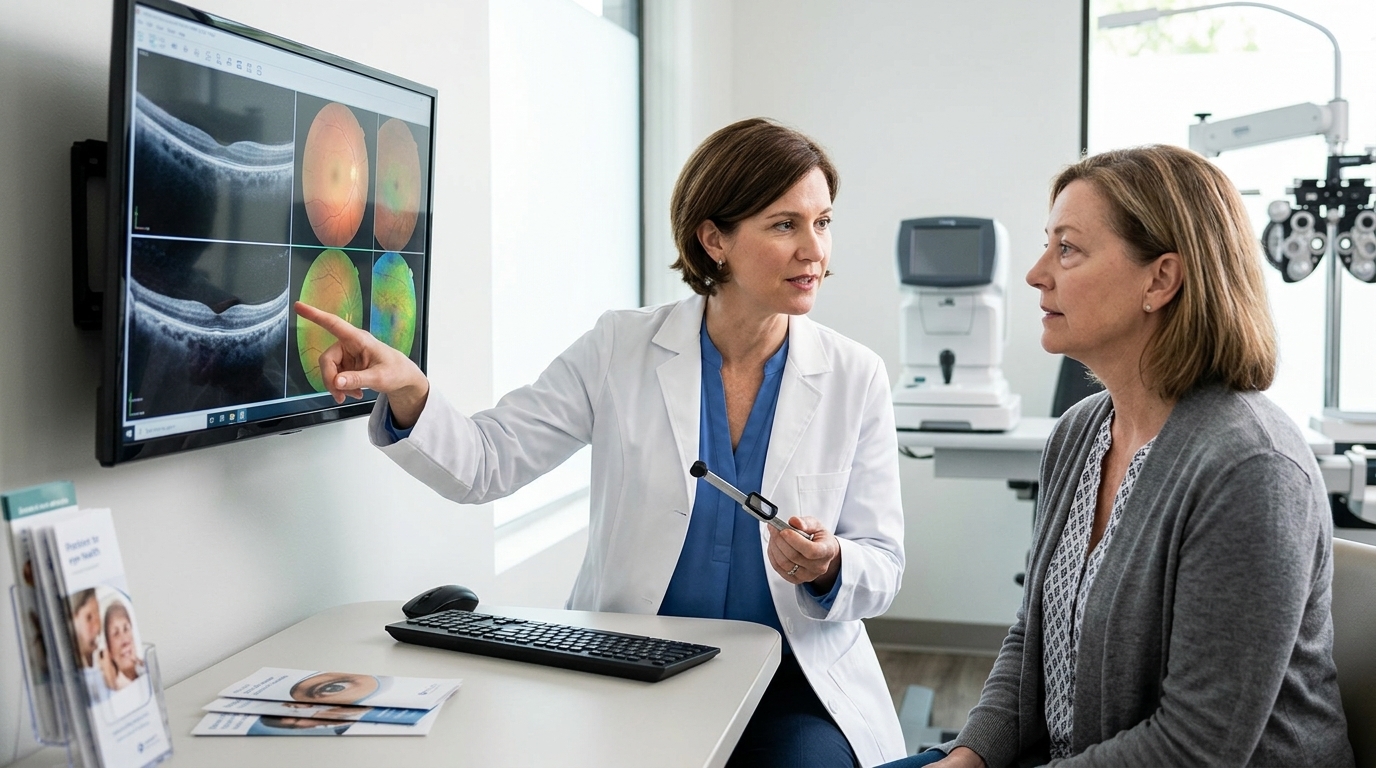
In 2026, the FDA approved Lumvoa for thyroid eye disease, adding another prescription treatment option in a field that previously had limited approved therapies. Patients should not assume that every treatment is right for every person. Treatment decisions depend on disease activity, symptom severity, medical history, risks, access, and specialist evaluation.
This topic also pairs well with BridgeMill Eye Care’s AI in optometry and early disease detection article. Technology cannot replace a doctor, but imaging and better monitoring can help eye care providers detect change earlier and track progression more carefully.
Treatment depends on severity and timing
Mild symptoms may need lubrication, sunglasses, sleep-position changes, thyroid coordination, smoking cessation support, and monitoring. Moderate or severe symptoms may need specialty care. Some patients need prisms for double vision. Others may need medication, eyelid treatment, orbital surgery, or eye muscle surgery.
The timing matters because thyroid eye disease can move through active and inactive phases. Active disease may involve inflammation, swelling, pain, and changing symptoms. Inactive disease may feel more stable, but the effects from earlier inflammation can remain. A treatment plan should match the disease stage and the patient’s symptoms.
When Patients Should Schedule an Eye Exam
Patients should schedule an eye exam when they notice persistent eye bulging, eyelid swelling, light sensitivity, dry gritty eyes, pressure behind the eyes, new headaches around the eyes, or vision that changes during the day. They should act faster if double vision appears or if one eye looks noticeably different from the other.
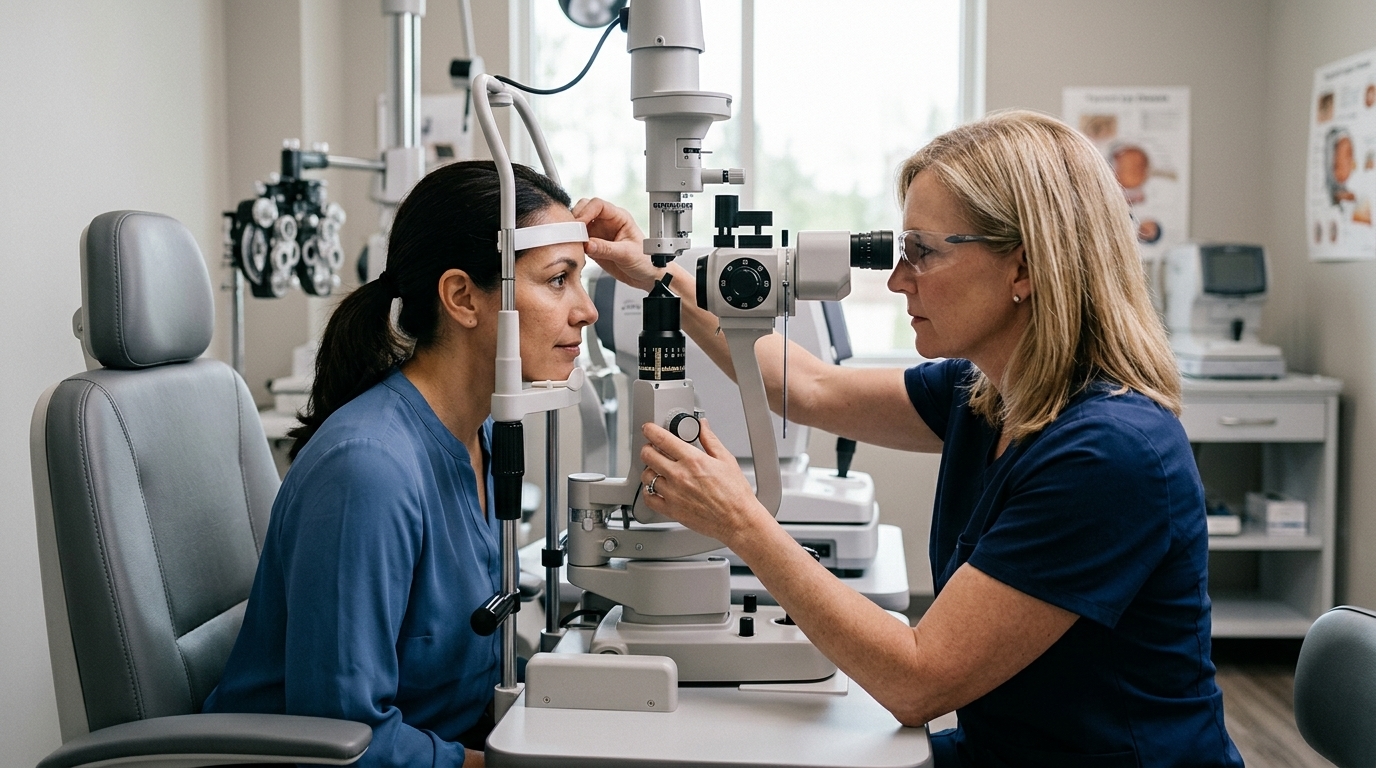
An eye exam may include vision testing, eye pressure checks, eye movement testing, eyelid measurements, tear film evaluation, optic nerve assessment, retinal imaging, and questions about thyroid history. Some patients may also need lab work, imaging, or coordination with an endocrinologist or ophthalmologist.
BridgeMill Eye Care’s common eye problems and prevention guide is a good internal link for readers who want a broader starting point. Thyroid eye disease is more specific, but general prevention content helps patients understand why symptoms should not be ignored.
Red flags that need urgent attention
Some symptoms should not wait for a routine visit. Sudden vision loss, severe eye pain, rapidly worsening bulging, new double vision, trouble moving the eye, color vision changes, or a dark curtain-like shadow need urgent medical attention. These signs may point to a more serious problem, including optic nerve pressure or another eye condition.
Patients should also be careful if symptoms affect driving or work safety. Double vision, fluctuating focus, and light sensitivity can make daily tasks harder. It is better to get checked early than to guess with drops, allergy medicine, or screen breaks.
Do not treat every red or gritty eye as allergies
Allergies can cause itching, redness, and watering. Dry eye can cause burning and grittiness. Screen time can cause fatigue and blur. But eye bulging, eyelid retraction, pressure behind the eyes, and double vision deserve a deeper look.
The most practical message is simple: if symptoms feel different, one-sided, progressive, or hard to explain, schedule an exam. Early documentation gives the eye doctor a baseline. That makes future changes easier to measure.
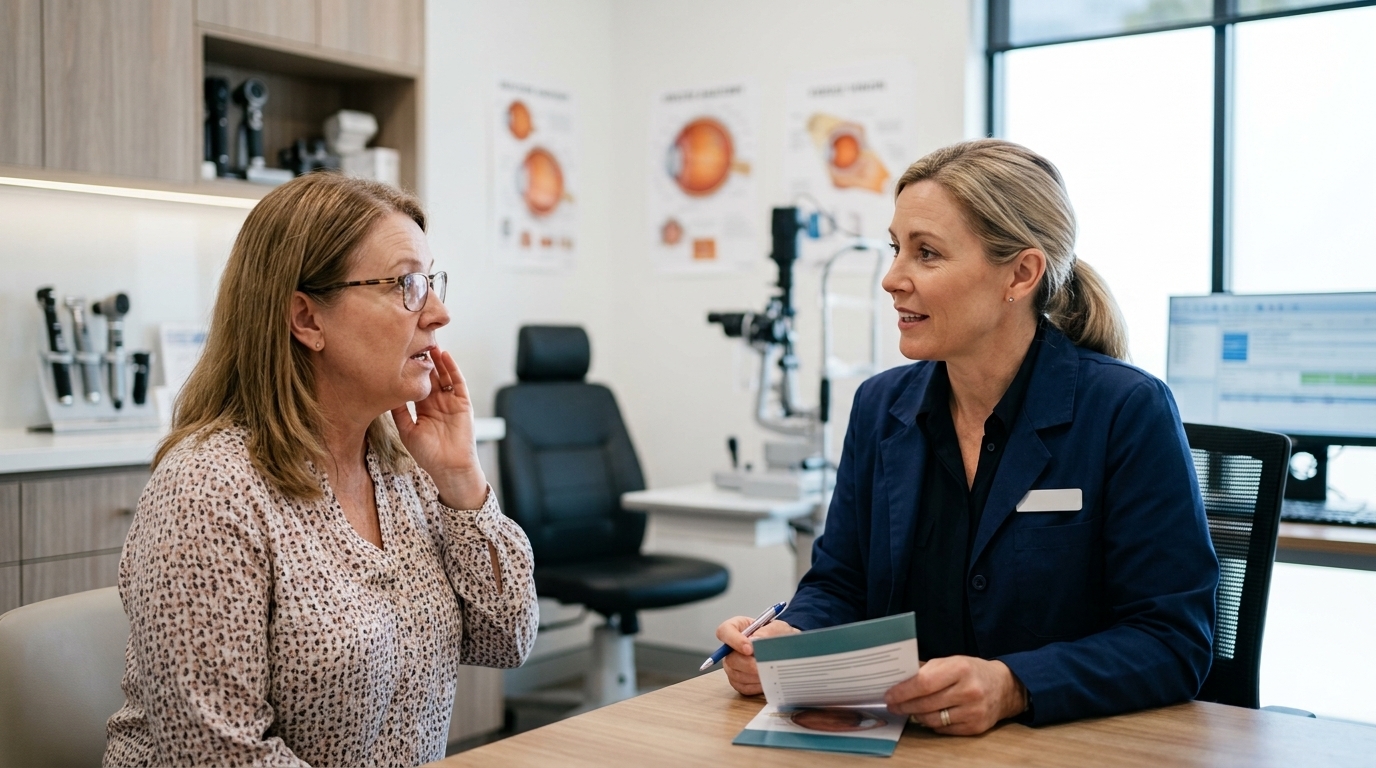
Thyroid eye disease 2026 is a timely topic because patients now have more information and more treatment conversations than before. The symptoms can start subtly, but they can affect comfort, appearance, focus, driving, and quality of life. Bulging eyes, eyelid changes, dry irritation, pressure, and double vision should not be brushed aside.
If you notice symptoms that may fit thyroid eye disease, the best next step is a comprehensive eye exam. A proper evaluation can help separate routine dry eye or allergies from a condition that needs monitoring, coordination, or specialty care.