Scleral lenses 2026 are becoming a bigger conversation for patients who struggle with regular contacts, blurry vision, dry eye discomfort, keratoconus, or irregular corneas. Many people assume contact lenses are either soft daily lenses or standard reusable lenses. When those do not work, they may think contacts are no longer an option. That is not always true.
Scleral lenses are specialty contact lenses. They are larger than typical soft contacts and rest on the white part of the eye instead of sitting mainly on the cornea. This design allows the lens to vault over the cornea and create a fluid-filled space between the lens and the eye surface. For the right patient, that can improve comfort and vision in ways standard lenses cannot.
These lenses are not only for one type of patient. They may help people with keratoconus, dry eye disease, corneal scars, post-surgical corneal changes, high prescriptions, irregular astigmatism, or contact lens intolerance. They can also help patients who have tried several lens types but still deal with blur, irritation, or unstable vision.
This article is for educational purposes only and should not replace a contact lens evaluation with an eye care professional. Scleral lenses require careful fitting, training, follow-up, and proper cleaning habits.
Why Scleral Lenses 2026 Are Getting More Attention
Scleral lenses are trending because more patients want personalized solutions. Modern life can make eye comfort harder. Screen time, dry indoor air, allergies, prior eye surgery, dry eye, and complex prescriptions can make ordinary lenses feel uncomfortable. Some patients see clearly in glasses but cannot tolerate standard contacts. Others wear contacts comfortably for only a few hours before vision fluctuates.
Scleral lenses offer a different approach. Instead of depending on the cornea for support, the lens rests on the sclera. This can help when the cornea has an irregular shape or when the eye surface needs extra protection. The fluid reservoir under the lens can also support comfort for certain dry eye patients.
For an outside medical overview, Cleveland Clinic explains that scleral lenses are larger rigid lenses that cover more of the eye surface than corneal lenses and can hold fluid against the cornea. Readers can review that guide here: Cleveland Clinic guide to scleral lenses.
How scleral lenses help with keratoconus
Keratoconus changes the shape of the cornea. Instead of staying smooth and round, the cornea can thin and bulge forward into a cone-like shape. That irregular shape can cause blurry vision, ghosting, glare, halos, distorted images, and poor night vision.
Regular soft contacts may not correct that irregular surface well enough. Glasses may also become less helpful as the shape changes. Scleral lenses can create a smoother optical surface over the irregular cornea. The lens does not flatten the disease itself, but it may help light focus more clearly for many patients.
This topic pairs well with BridgeMill Eye Care’s article on Daily Disposable Contact Lenses in 2026. Daily disposables are useful for many routine contact lens wearers, but patients with keratoconus or irregular corneas may need a more customized specialty lens design.
Vision may improve when glasses stop helping enough
Some keratoconus patients notice that glasses no longer give crisp vision. They may keep updating prescriptions but still see shadows, streaks, or double edges around letters and lights. That does not always mean nothing can help. It may mean the cornea needs a specialty lens approach.
A scleral lens fitting can measure the corneal shape and lens vault carefully. The goal is to improve vision while avoiding pressure on sensitive corneal areas. This is why follow-up visits matter. A lens should not only help vision; it should also fit safely.
Cross-linking and lenses may play different roles
Patients with keratoconus may hear about corneal cross-linking and assume it replaces contact lenses. These treatments serve different goals. Cross-linking may help slow progression in appropriate patients, while specialty lenses may help improve functional vision.
Some patients need both. Others may only need monitoring or specialty lenses. The right plan depends on age, corneal shape, progression, symptoms, and eye health. An eye exam can help decide which conversation matters most.
How scleral lenses may help dry eye symptoms
Dry eye can make contact lens wear frustrating. Patients may feel burning, grittiness, watering, redness, light sensitivity, and fluctuating blur. Some people remove their contacts early because their eyes feel irritated before the day ends.
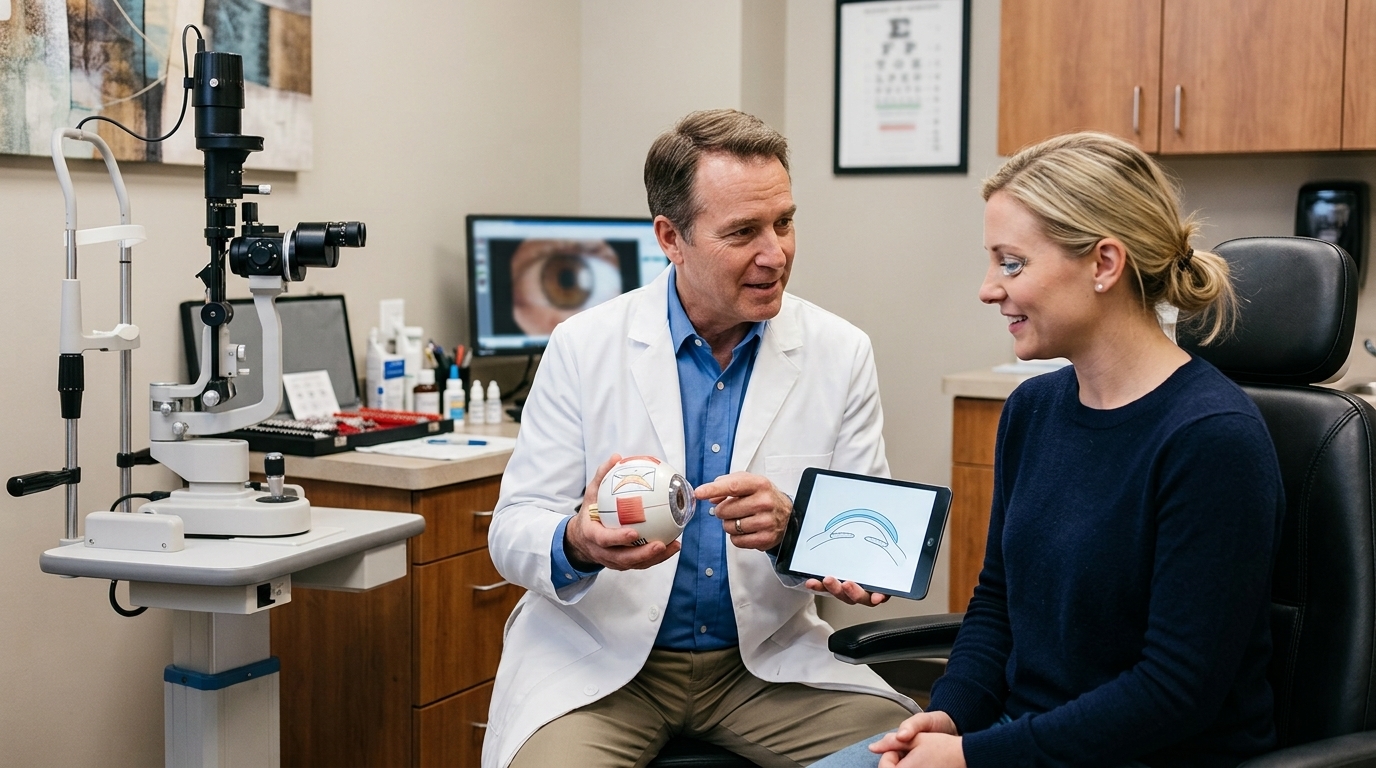
Scleral lenses may help selected dry eye patients because the lens can hold preservative-free saline over the cornea while the lens is worn. That fluid reservoir can reduce friction between the eyelids and the eye surface. It may also help patients with certain ocular surface conditions feel more stable during the day.
BridgeMill Eye Care already has helpful dry eye content, including Dry Eye in 2026 and Menopause and Dry Eye in 2026. Those posts are useful internal links because scleral lenses may become part of a larger dry eye management plan, not a replacement for diagnosing the cause.
Scleral lenses do not fix every dry eye problem
Scleral lenses can help some patients, but they are not magic. If dry eye comes from eyelid inflammation, meibomian gland dysfunction, allergy, medication side effects, autoimmune disease, or environmental triggers, those issues may still need treatment.
The smartest plan starts with diagnosis. Patients should know whether their symptoms come from tear evaporation, tear deficiency, inflammation, poor blinking, contact lens fit, or another condition. Once the cause is clearer, the eye doctor can decide whether scleral lenses make sense.
What to Expect During a Scleral Lens Fitting
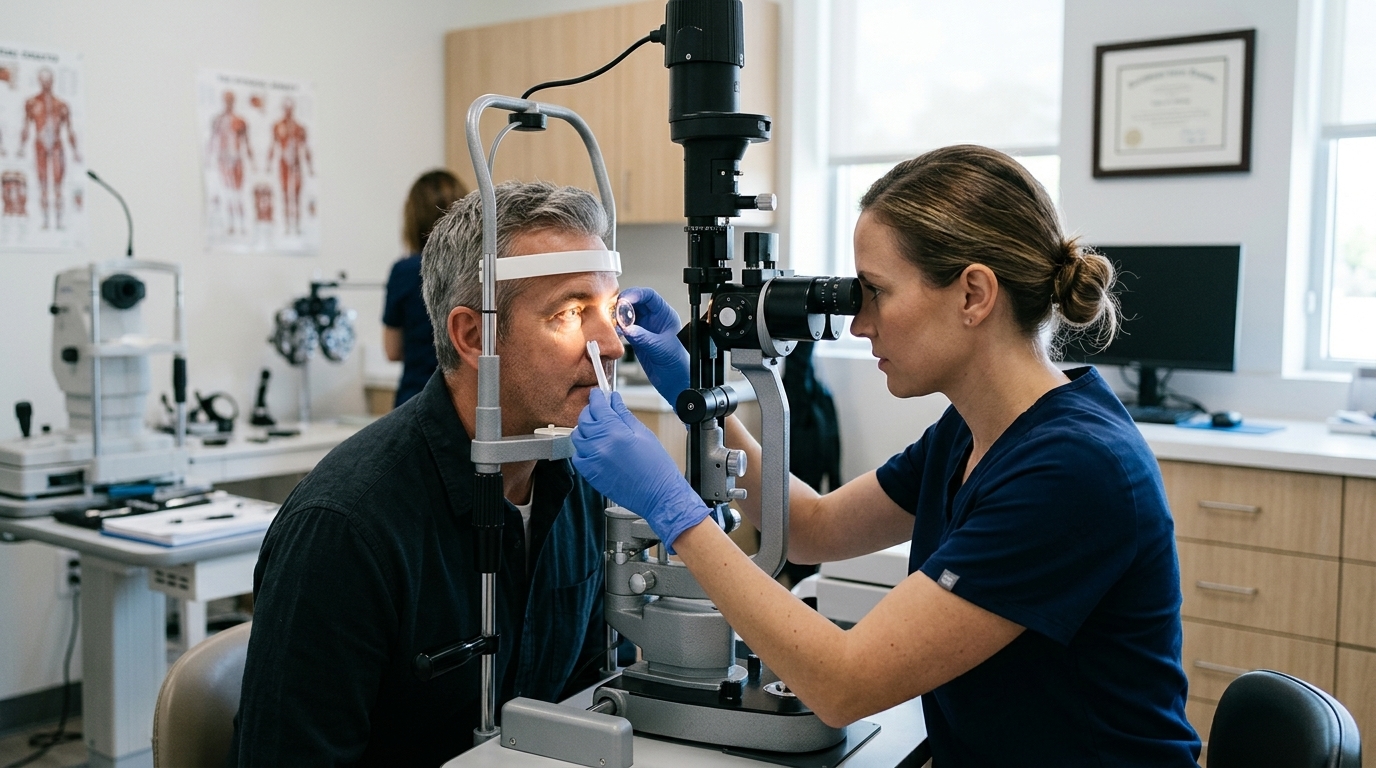
A scleral lens fitting is more detailed than a standard contact lens visit. The eye care provider may check vision, corneal shape, tear film, eyelids, eye surface health, and prescription needs. Special imaging or topography may help map the cornea and guide the lens design.
The fitting process often takes time because the lens must clear the cornea properly and land comfortably on the sclera. The provider may evaluate how the lens settles after wear, how much fluid remains under the lens, whether bubbles appear, and whether the edges feel comfortable.
Patients also need training. Scleral lenses require filling the bowl of the lens with preservative-free saline before insertion. Patients must learn how to insert and remove the lens safely, clean it properly, and recognize symptoms that need attention.
Who should ask about scleral lenses?
Patients should ask about scleral lenses if regular contacts feel uncomfortable, vision fluctuates, glasses no longer correct vision clearly, or dry eye makes lens wear difficult. People with keratoconus, corneal scarring, post-LASIK changes, post-RK changes, irregular astigmatism, or ocular surface disease may also be candidates.
University of Iowa Health Care notes that scleral lenses may help people with corneal disease such as keratoconus, dry eyes, LASIK, RK, PRK, trauma, and corneal transplant history. Readers can review that overview here: University of Iowa Health Care scleral lens guide.
Patients who struggle with screen-related dryness should also read Digital Eye Strain in 2026. Screen habits can worsen dryness and blur, even when the contact lens design is only part of the problem.
Care habits matter because scleral lenses are medical devices
Scleral lenses require clean hands, proper solution, safe storage, and regular follow-up. Patients should not rinse them with tap water, sleep in them unless specifically directed, or ignore redness and pain. Contact lenses touch the eye, so poor hygiene can cause serious problems.
Call the eye care provider promptly if you notice eye pain, worsening redness, discharge, sudden blurry vision, light sensitivity, or a white spot on the cornea. Remove the lens until you receive proper guidance.

Scleral lenses 2026 give patients another option when regular contacts are not enough. They may help with keratoconus, dry eye, irregular corneas, post-surgical changes, and contact lens intolerance. They can improve comfort and clarity for the right patient, but they require proper evaluation and care.
If your contacts feel uncomfortable, your vision changes throughout the day, or glasses no longer give the clarity you need, do not assume you have run out of options. A specialty contact lens exam can help determine whether scleral lenses belong in your vision care plan.