
Geographic atrophy treatment has become an important eye health topic in 2026. For many years, patients with advanced dry age-related macular degeneration had limited treatment options. Eye doctors could monitor the condition, recommend healthy habits, discuss supplements when appropriate, and watch for signs of wet AMD. Today, the conversation has changed.
Geographic atrophy, often called GA, is an advanced form of dry AMD. It damages cells in the macula, which is the part of the retina used for sharp central vision. This can affect reading, driving, recognizing faces, watching television, and seeing fine detail.
Newer medications have created more discussion around geographic atrophy treatment. These treatments do not cure dry AMD. They also do not bring back vision that has already been lost. However, they may help slow the growth of geographic atrophy in some patients. That makes early diagnosis, careful monitoring, and regular eye exams more important than ever.
Why Geographic Atrophy Is Getting More Attention
Age-related macular degeneration is one of the most common causes of vision loss in older adults. Some people have early AMD for years with few symptoms. Others slowly develop more advanced changes. When dry AMD progresses to geographic atrophy, the damage can become more noticeable and more serious.
Patients may first notice blurry central vision, trouble reading, missing letters, difficulty seeing in dim light, or a dark spot near the center of vision. These changes can affect independence and quality of life. They can also feel frustrating because side vision may stay normal while central detail becomes harder to see.
What Geographic Atrophy Means for Vision
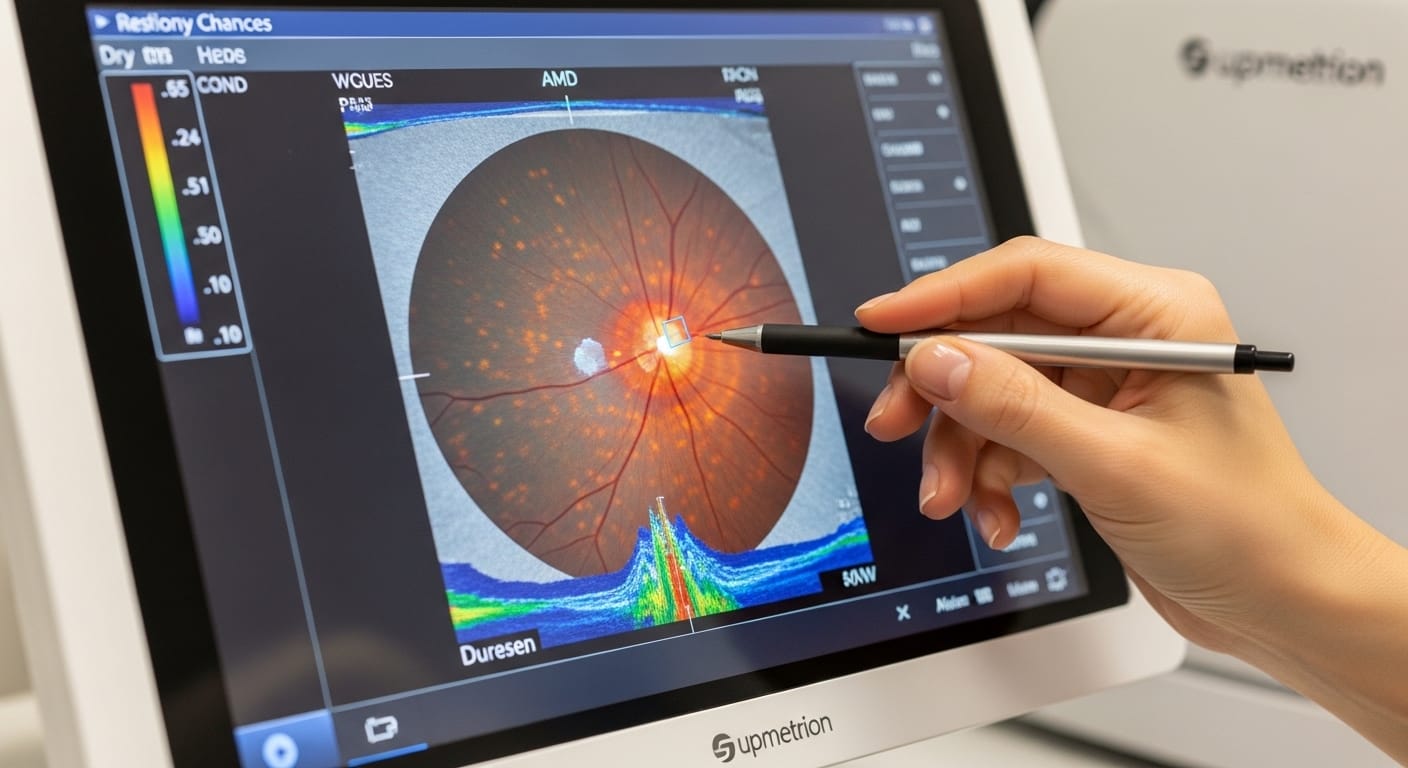
Geographic atrophy affects the macula. This part of the eye helps you see fine detail straight ahead. When GA damages retinal cells, the eye may lose small areas of central vision. Over time, those areas may grow larger.
Some patients describe blank or blurry spots. Others say printed words look broken. A person may see the outline of a clock but struggle to read the numbers. Another person may recognize a person’s body shape but have trouble seeing the face clearly.
This is why regular exams matter. A patient may adapt to slow vision changes without realizing how much the macula has changed. Retinal imaging can help detect and track these changes more clearly.
Dry AMD Is Different From Wet AMD
Dry AMD and wet AMD are related, but they are not the same. Dry AMD usually progresses more slowly. It often involves drusen, pigment changes, and thinning of retinal tissue. Geographic atrophy is an advanced stage of dry AMD.
Wet AMD involves abnormal blood vessel growth under the retina. These vessels can leak fluid or blood. Wet AMD can cause faster vision loss and needs urgent treatment. A patient with dry AMD should still watch for sudden changes because dry AMD can convert to wet AMD.
Warning signs may include sudden distortion, new wavy lines, a dark spot, or a sudden drop in central vision. These symptoms should never be ignored.
New Treatments Have Changed the Conversation
For years, patients heard that there was no approved treatment to slow geographic atrophy. That created frustration for many families. Newer injectable medications have changed that discussion.
These medicines target part of the immune system called the complement pathway. This pathway appears to play a role in AMD damage for some patients. By targeting it, the goal is to slow the expansion of geographic atrophy.
That said, geographic atrophy treatment is not simple. The medicines require eye injections on a schedule. They also require careful discussion of benefits, risks, cost, follow-up visits, and patient goals.
Treatment May Slow Progression, Not Restore Lost Vision
This point is important. GA treatments may slow the growth of damaged areas. They do not reverse the disease. They do not restore retinal cells that have already died. They also may not improve the vision chart score right away.
Patients should ask realistic questions. How advanced is the condition? Is the affected area near the center of vision? How quickly does it appear to be growing? What are the risks of injections? How often will follow-up visits be needed?
A clear conversation helps patients make better choices. Some may choose treatment. Others may choose monitoring. The right decision depends on the eye exam, imaging results, health history, and lifestyle needs.
How Patients Can Protect Vision With Dry AMD and Geographic Atrophy
Even with new treatments, prevention and monitoring still matter. Many patients need a long-term care plan. That plan may include regular dilated eye exams, retinal imaging, home monitoring, nutrition guidance, and referral to a retina specialist when needed.
The goal is not only to discuss one medication. The goal is to protect useful vision for as long as possible. That means patients should take symptoms seriously and keep follow-up appointments.
Comprehensive Eye Exams Help Detect Changes Early
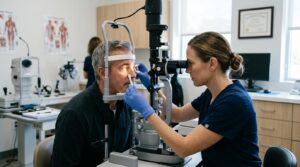
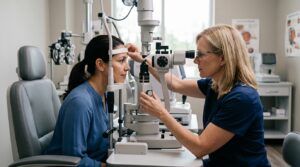
A comprehensive eye exam can reveal more than a basic vision check. Your eye doctor may evaluate the retina, check the macula, review risk factors, measure vision, and use imaging when needed. These tools can help identify AMD changes before symptoms become severe.
Risk factors may include age, family history, smoking, high blood pressure, cardiovascular disease, and lighter eye color. Diet and lifestyle can also matter. Patients should share their medical history and medications during the visit.
This topic connects well with the Bridge Mill Eyecare eye care services page. It also supports the site’s guide on common eye problems and prevention.
Home Monitoring Can Help Patients Act Faster

Patients with AMD may be asked to monitor vision at home. An Amsler grid can help some people notice new distortion or missing areas. This tool does not replace an exam, but it can alert patients to changes between visits.
Good lighting also helps. Patients may need brighter lamps, magnifiers, high-contrast reading materials, or larger phone text. Low-vision tools can support daily life when central vision becomes harder to use.
If vision changes suddenly, do not wait for the next routine appointment. Sudden distortion, new dark spots, flashes, floaters, or sudden vision loss need prompt medical attention.
Lifestyle and AREDS2 Supplements May Still Matter
Some patients with intermediate AMD or advanced AMD in one eye may benefit from AREDS2 supplements. These supplements are not for everyone. Patients should ask an eye care professional before starting them, especially if they take other medications or have health conditions.
Healthy habits may also support eye health. Patients should avoid smoking, manage blood pressure, eat a nutrient-rich diet, wear UV-protective sunglasses, and keep regular medical appointments. People with diabetes should also stay current with eye exams. Readers can review why diabetic eye exams matter for related prevention guidance.
Geographic atrophy treatment is changing, but early detection remains the foundation of care. Patients should not wait until vision loss becomes severe. A comprehensive exam can help identify AMD stage, track progression, and guide the next step.
New treatments may offer hope for some patients with advanced dry AMD. Still, they require careful review. The best care plan may include monitoring, lifestyle changes, supplements when appropriate, low-vision support, or referral for treatment evaluation.
The bottom line is simple. Geographic atrophy deserves attention before it disrupts daily life. If reading, driving, face recognition, or central detail becomes harder, schedule an eye exam. The sooner the condition is understood, the better the care plan can be.
For additional authority, readers can review the American Academy of Ophthalmology’s information on geographic atrophy, AAO’s overview of Syfovre and Izervay, and the National Eye Institute’s information on AREDS and AREDS2.