Pickleball eye protection 2026 is becoming a serious eye health topic. The sport looks friendly, social, and low impact. That is part of its appeal. People of many ages can play it, and the rules are easy to learn. Still, pickleball can create real eye injury risks.
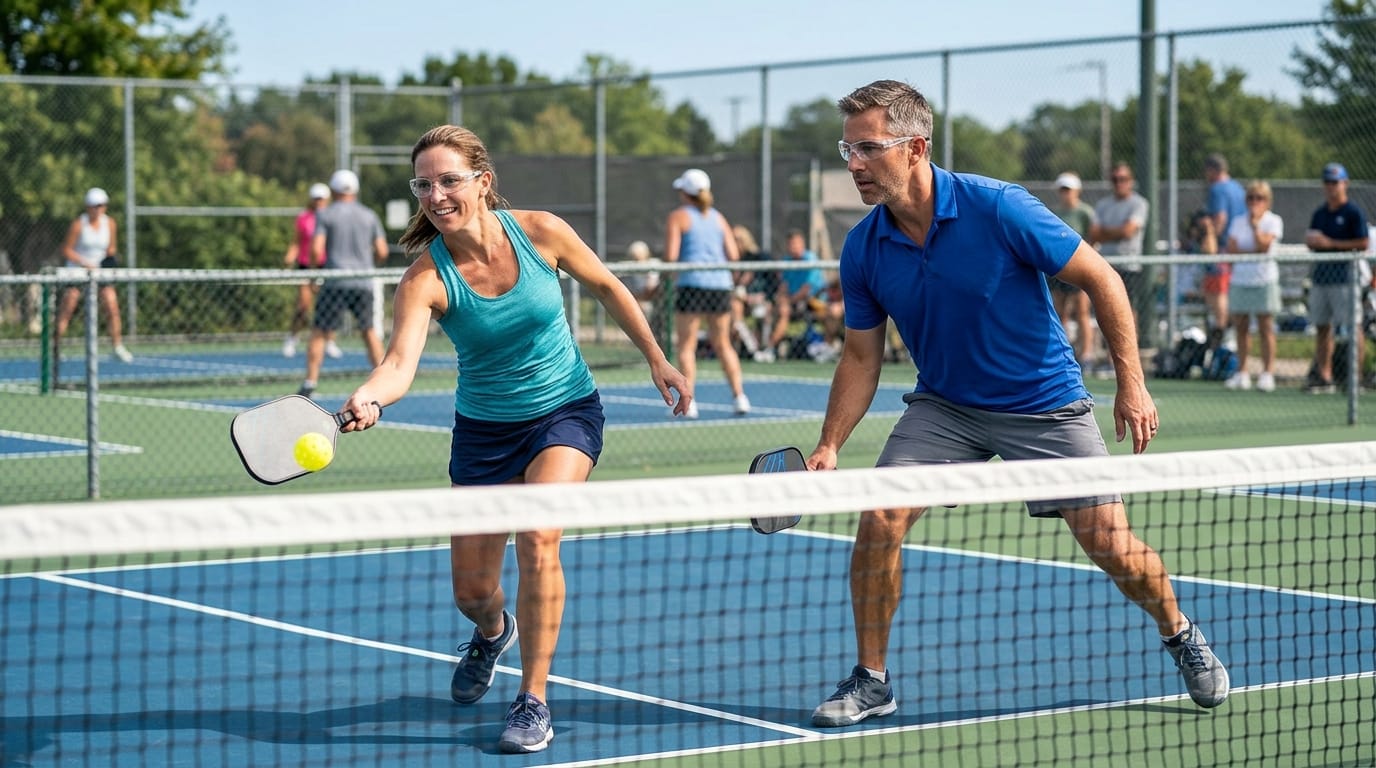
The danger comes from speed, distance, and reaction time. Players often stand close to the net during fast exchanges. A hard plastic ball can travel quickly across a short space. A paddle swing can also happen close to another player’s face.
Many players wear court shoes, sun protection, and comfortable athletic clothing. Fewer players think about eye protection. That is a mistake because a direct hit to the eye can cause more than temporary pain. It may lead to corneal abrasions, bleeding inside the eye, retinal problems, orbital fractures, or lasting vision changes.
This guide explains why pickleball eye protection matters, what injuries can happen, which eyewear features to consider, and when an eye exam becomes urgent after a hit.
Why Pickleball Eye Injuries Are Getting More Attention
Pickleball keeps growing because it feels approachable. It attracts beginners, weekend athletes, retirees, families, and competitive players. More people are spending time on crowded courts, which means injury risks are also increasing.
Sports-related eye injuries often happen fast. A player may have less than a second to react to a ball or paddle. Even skilled players can misjudge a shot at the kitchen line. A doubles partner can turn suddenly, and a ball can deflect off a paddle edge without warning.
Pickleball eye protection 2026 deserves attention because many injuries are preventable. Protective eyewear cannot remove every risk, but it can reduce the chance of a direct hit to the eye. This matters even more for players with previous eye surgery, high prescriptions, eye disease, or only one strong-seeing eye.
BridgeMill Eye Care already covers broader prevention habits in Common Eye Problems and How to Prevent Them. Pickleball adds a sports-specific layer to the same idea: prevention is easier than recovery.
What makes pickleball risky for the eyes?
Pickleball combines several risk factors. The court is compact, and players often stand close to each other. Quick volleys happen near the net. The ball is lightweight, but it is hard enough to injure the eye at speed.
Direct ball impact is one concern. Paddle impact is another. Falls also matter, especially for older adults or anyone with balance issues. A fall can cause facial trauma, broken glasses, or blunt injury around the eye.
Some players wear regular prescription glasses and assume they are protected. That is not always true. Regular eyewear can break, shift, or fail to provide side coverage. Sports eyewear should protect from front and side impact.
Regular eyeglasses are not the same as sports protection
Everyday glasses help vision. They are not designed for high-speed sports impact. The lenses, frame, and fit may not protect the eye during a ball strike or fall.
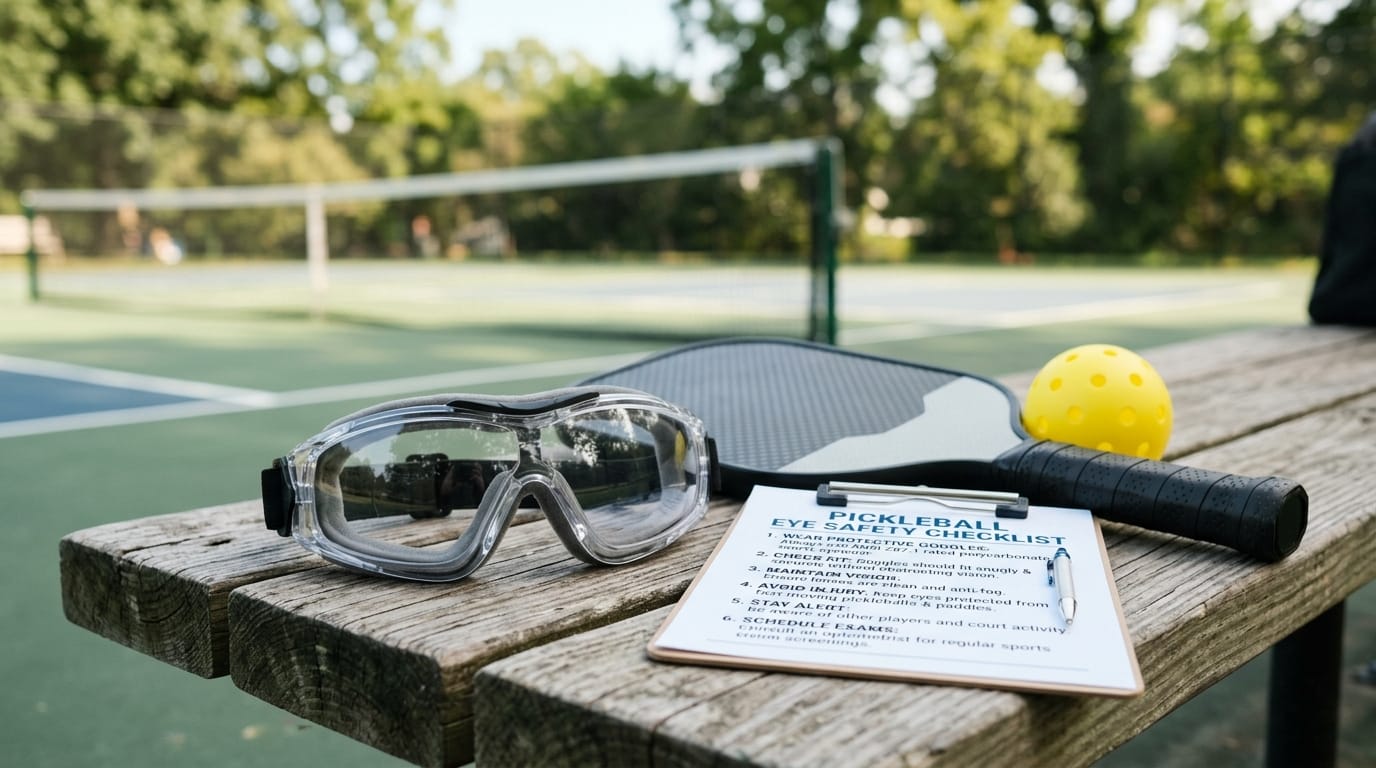
Sports protective eyewear should use impact-resistant materials and a secure fit. Polycarbonate lenses are commonly used because they are lightweight and impact resistant. Wraparound or side-shield designs can add protection from angled hits.
Players who need prescription lenses should ask about prescription sports goggles instead of playing in fragile daily glasses. Comfort matters too. Eyewear that fogs, slips, or distorts vision may get left in the bag.
Older adults may need extra caution
Pickleball is popular with older adults, and that is one reason eye safety matters. Aging can affect reaction time, balance, depth perception, contrast sensitivity, and recovery from injury.
Some older players also have cataracts, glaucoma, diabetes-related eye concerns, macular degeneration risk, or previous eye surgery. A blow to the eye may be more concerning when the eye already needs monitoring.
Older adults do not need to avoid pickleball. They just need to play smarter. Protective eyewear, proper shoes, good lighting, hydration, and regular eye exams can all help reduce risk.
What symptoms should not be ignored after a pickleball eye hit?
Some eye injuries feel obvious right away. Others seem mild at first. A player may feel sore, blink repeatedly, or notice watering. They may assume the eye is fine because the pain improves after a few minutes.
That assumption can be risky. Warning signs include blurred vision, double vision, eye pain, light sensitivity, redness, swelling, bleeding, new floaters, flashes of light, nausea, headache, or a shadow in the vision. Any sudden vision change deserves prompt attention.
A hit near the eye can also injure the eyelid, brow, cheekbone, or orbit. Swelling around the eye can hide deeper problems. A player should not continue the game if vision feels strange or pain increases.
BridgeMill’s article on Dry Eye in 2026 explains how eye comfort can involve more than surface symptoms. Sports injuries work the same way. The visible irritation may not tell the full story.
When to schedule an eye exam after impact
Schedule an eye exam quickly if symptoms last, vision changes, or the impact felt strong. Seek urgent care for severe pain, sudden vision loss, new flashes, new floaters, blood inside the eye, or a curtain-like shadow.
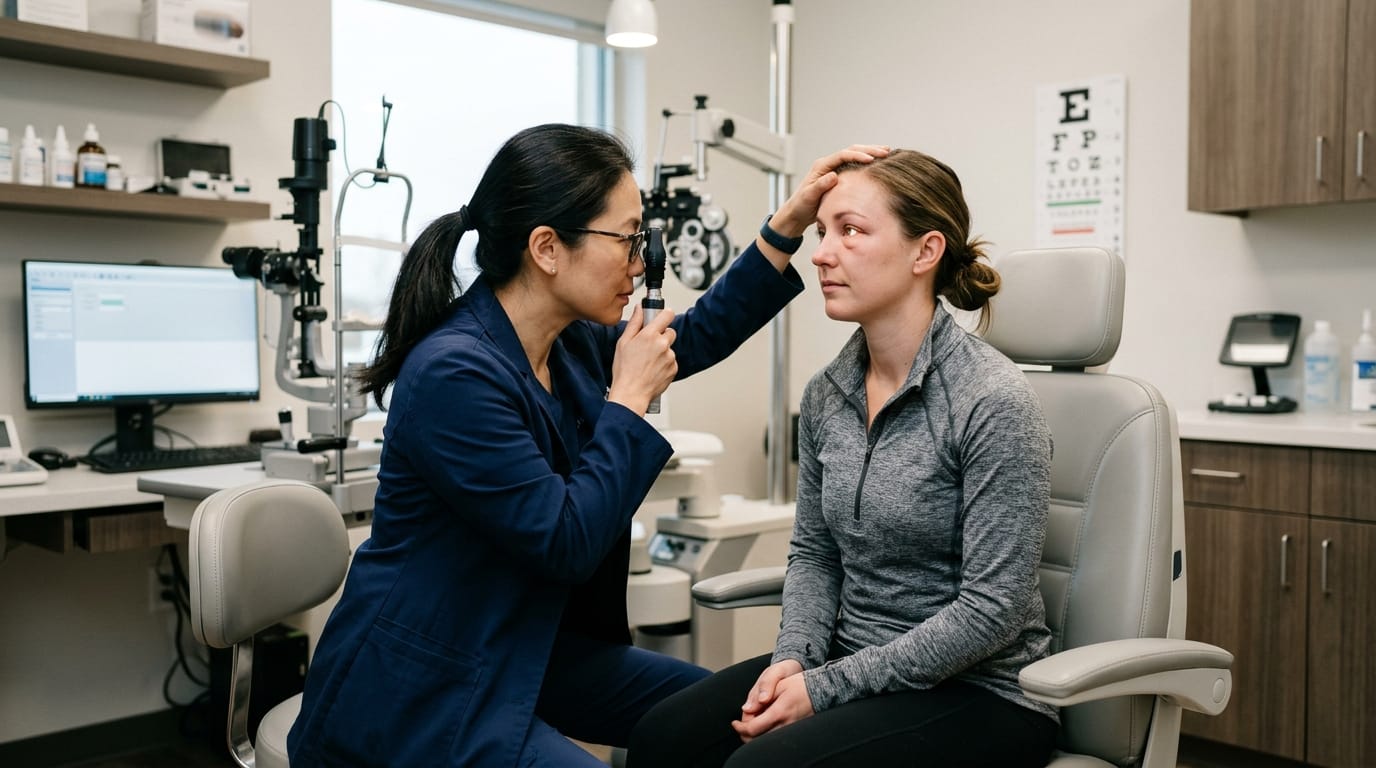
An eye care professional can check the cornea, pupil reaction, eye pressure, retina, and surrounding structures. This matters because injuries such as hyphema, retinal tears, or internal inflammation may need careful monitoring.
Do not rub the eye after impact. Avoid pressing on it. Do not use random drops to “clear it up” without guidance. If contact lenses are in place and pain starts, remove them only if it is safe and easy to do so.
How to Choose Pickleball Eye Protection That Players Will Actually Wear
The best protective eyewear is the pair a player will wear every match. It should protect well, fit securely, stay clear, and feel comfortable during movement. If it pinches, fogs, or blocks vision, the player will stop using it.
Start with fit. Eyewear should sit close enough to protect the eye area without pressing painfully. It should stay stable during quick steps and turns. Adjustable straps or sport frames can help.
Next, check the lenses. Clear lenses work well indoors and in low light. Tinted or photochromic lenses may help outdoor players. UV protection also matters for daytime courts.
For broader outdoor eye health, BridgeMill’s guide to common eye problems reminds readers to use UV-blocking sunglasses outdoors.
Protective eyewear should match the player’s vision needs
Some players need prescription correction. Others need help with glare, contrast, or sunlight. A player who cannot see the ball clearly may react late, swing poorly, or misjudge distance. Vision quality is part of safety.
People who use readers, progressives, or contact lenses may need a custom plan. Progressive lenses can feel awkward during quick court movement for some players. Contacts may dry out outdoors. Prescription sports eyewear may offer a better balance.
This connects with BridgeMill’s post on Do Blue Light Glasses Work in 2026?. The bigger lesson is the same. Eyewear should solve the real vision problem, not just follow a trend.
Screen habits and court vision can overlap
Players who spend hours on screens before or after games may notice eye fatigue. Blurry vision late in the day may not come from pickleball alone. Screen use, dry eye, contact lenses, and uncorrected prescriptions can all affect court performance.
If vision feels blurry during games, an eye exam can help identify the cause. BridgeMill’s article on Digital Eye Strain in 2026 explains how screen habits can affect comfort and focus.
Children and teens who play pickleball also need eye protection. Young players may react quickly, but they still face ball and paddle impact risks. Parents should also watch for squinting, headaches, or holding screens too close. For more on younger eyes, read Childhood Myopia in 2026.
For an outside authority, readers can review the American Academy of Ophthalmology’s guidance on pickleball and eye protection here: AAO pickleball eye protection advice.
The bottom line is simple. Pickleball is fun, social, and good for staying active, but the eyes need protection. A hard ball, paddle edge, or fall can cause an injury that lasts much longer than one match.
Pickleball eye protection 2026 should be part of a smart player’s gear, just like shoes and a paddle. Choose impact-resistant eyewear, make sure it fits, consider prescription needs, and schedule an eye exam after any concerning eye impact. Clear vision is too important to leave unprotected on the court.