Glaucoma eye drops in 2026 are getting renewed attention because a new once-daily treatment candidate has moved into formal FDA review. The investigational medicine, called K-911 or bimatoprost grenod, is being studied for people with open-angle glaucoma or ocular hypertension.
The U.S. Food and Drug Administration accepted the New Drug Application for K-911 in August 2026. The agency has assigned a target action date of April 30, 2027. That means the medication is under review, not approved for routine use.
The timing is especially relevant for eye-care patients because new data from the K-911 clinical program are being presented at the American Academy of Optometry annual meeting in October 2026. The development adds another chapter to the search for convenient ways to lower intraocular pressure, or IOP.
This guide explains what K-911 is, why once-daily pressure-lowering treatment matters, what FDA review actually means, and why regular glaucoma testing remains essential even when new therapies appear promising.
Why New Glaucoma Eye Drops in 2026 Are Getting Attention
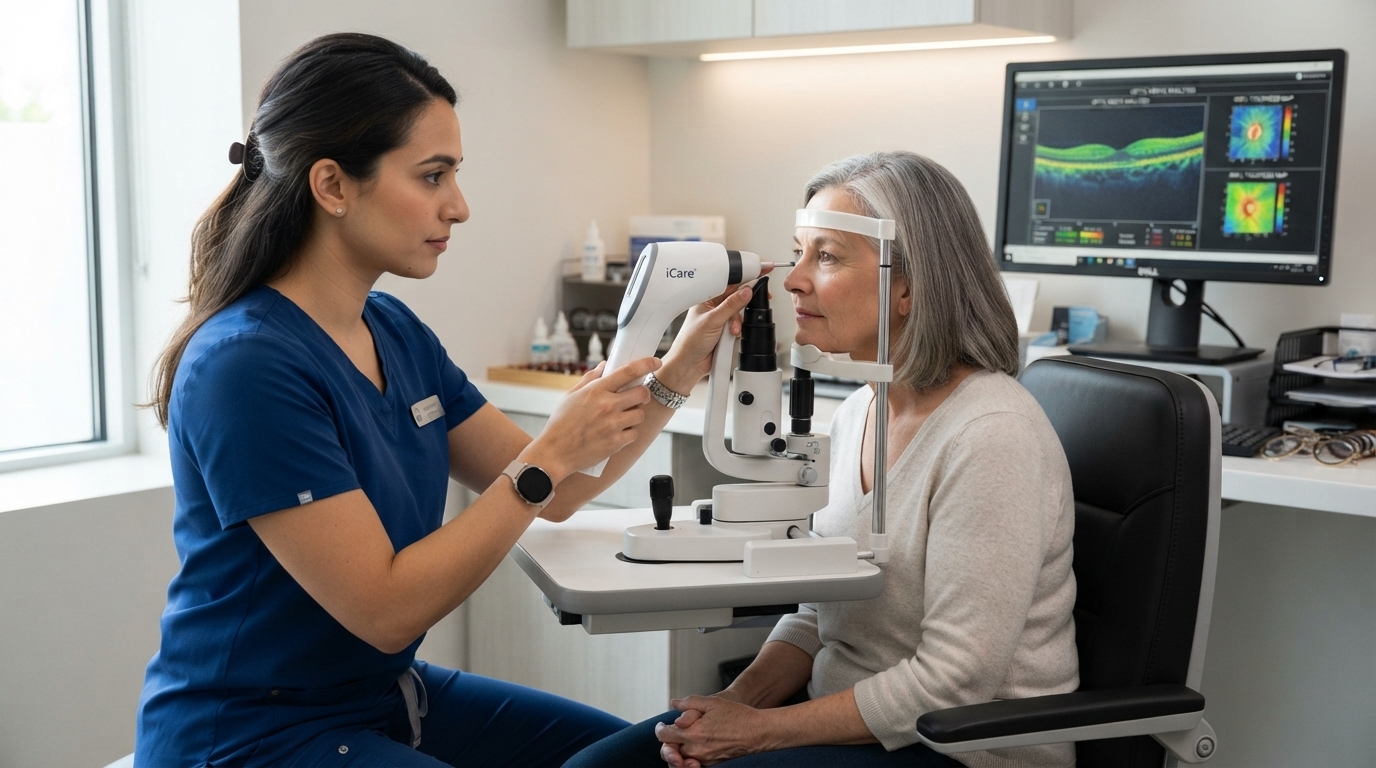
Glaucoma is a group of eye diseases that can damage the optic nerve and lead to permanent vision loss. The most common form in the United States is open-angle glaucoma. It can develop slowly and may cause no obvious symptoms in its early stages.
High eye pressure is an important risk factor, although glaucoma can also occur in people whose pressure falls within a range often considered normal. Lowering IOP is one of the main ways doctors try to reduce the risk of further optic nerve damage.
Prescription eye drops remain a common treatment. They can reduce fluid production or improve drainage. That helps explain the interest in new once-daily medicines that may simplify treatment if they prove safe and receive regulatory approval.
How K-911 Is Designed to Lower Eye Pressure
K-911 is also known as bimatoprost grenod or NCX 470. It is an investigational nitric oxide-donating form of bimatoprost being developed as a once-daily eye drop for open-angle glaucoma and ocular hypertension.
Bimatoprost belongs to a familiar family of pressure-lowering medicines. K-911 adds a nitric oxide component designed to support another drainage pathway. When fluid does not drain efficiently, pressure can rise, so improving outflow can help lower IOP.
K-911 is being studied because it is designed to influence more than one outflow route. That dual approach may help explain the interest surrounding the drug, but it does not guarantee approval or make it the right option for every patient.
The Dual-Pathway Approach Is the Key Idea
The nitric oxide portion of K-911 is intended to support conventional aqueous humor outflow through the trabecular meshwork and Schlemm’s canal. The bimatoprost component supports uveoscleral outflow.
Those two pathways help fluid leave the eye. Improving outflow can reduce IOP, which is important because studies have shown that lowering eye pressure can slow or prevent glaucoma-related vision loss in many patients.
The practical point is that glaucoma medicines can work in different ways. Eye doctors may choose treatment based on the pressure target, response, side effects, dosing burden, and other factors.
Our existing guide to glaucoma testing and early detection explains why pressure measurement is only one part of a full glaucoma evaluation.
FDA Review Does Not Mean K-911 Is Approved
This distinction is essential. The FDA has accepted the application for review, but K-911 remains investigational in the United States.
Acceptance means the agency determined that the application was complete enough for a formal review. It does not mean the FDA has already concluded that the treatment should be marketed.
The current target action date is April 30, 2027. Until the FDA completes its review and issues a decision, patients should not treat K-911 as an approved alternative to their prescribed glaucoma medication.
Regulators will review clinical data, safety information, manufacturing details, labeling, and other evidence before making a decision. An FDA filing or review is therefore different from final approval.
What the Clinical Studies Tell Us So Far
The application is supported by Phase 3 studies involving people with open-angle glaucoma or ocular hypertension. One published Phase 3 trial, called Mont Blanc, compared NCX 470 with latanoprost, a widely used prostaglandin medication.
In that trial, NCX 470 lowered intraocular pressure across the measured treatment time points and met the study’s main comparison goals. Eye redness, also called conjunctival or ocular hyperemia, was among the commonly reported adverse effects.
A second pivotal study, Denali, also contributed to the regulatory submission. Additional Denali analyses and aqueous humor data are being discussed at the American Academy of Optometry meeting in 2026. These results support regulatory review, but they do not tell an individual patient which treatment is best.
Lowering Eye Pressure Is Important, but It Is Not the Whole Glaucoma Picture
An IOP number is useful, but glaucoma management should not rely on pressure alone. Two people can have the same measured pressure and very different levels of risk.
Eye doctors may examine the optic nerve, measure corneal thickness, perform visual field testing, use optical coherence tomography, and track changes over time. Some people develop glaucoma despite pressure readings that do not look unusually high, while others have ocular hypertension without developing glaucoma.
Our article on common eye problems and prevention provides broader background on glaucoma, macular degeneration, dry eye, and other conditions that may be found during routine eye care.
What Patients Should Know About Glaucoma Treatment in 2026
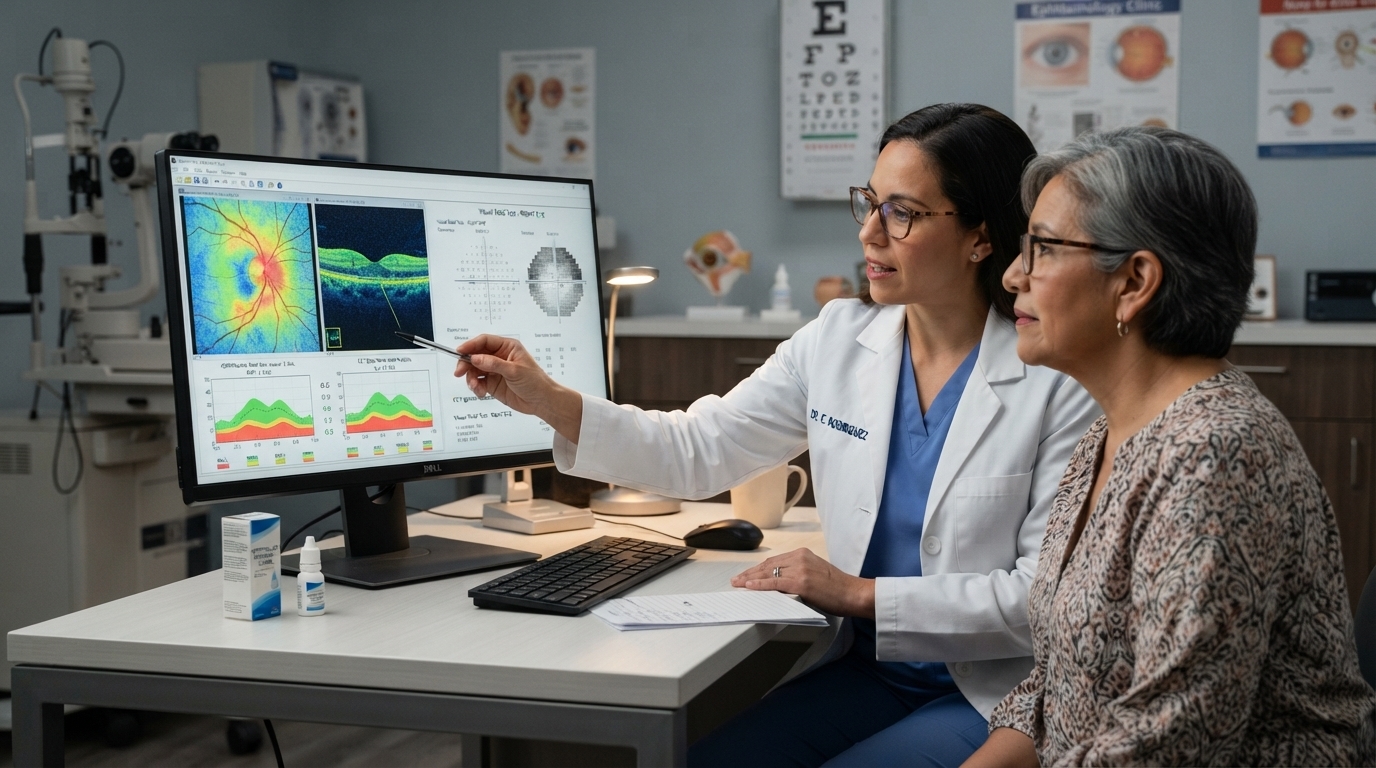
New drug development can be encouraging, especially for people who struggle with side effects, complex dosing schedules, or pressure that remains above the target set by their eye doctor. Still, the arrival of a new candidate does not make existing treatments outdated.
Current glaucoma care may include prescription drops, laser treatment, minimally invasive glaucoma surgery, or other surgery. The goal is to protect remaining vision by keeping eye pressure at a level that reduces the risk of further optic nerve damage.
Regular Monitoring Still Matters More Than Treatment Headlines
A person can have open-angle glaucoma without noticing a clear change in central vision. Peripheral vision may decline slowly, and the brain can adapt to gradual changes.
That is why comprehensive dilated exams and glaucoma testing remain important. Testing may include pressure measurement, optic nerve evaluation, OCT imaging, visual field testing, and other assessments based on the patient’s risk.
People with a family history of glaucoma, elevated pressure, older age, or suspicious optic nerve findings may need closer monitoring. The schedule should be individualized.
The National Eye Institute explains that glaucoma damage cannot be reversed, but early treatment can often help stop or slow additional damage. That makes detection and follow-up just as important as the specific medication chosen.
Patients who also have diabetes should keep up with retinal monitoring. Our 2026 diabetic eye exam guide explains why clear day-to-day vision does not always mean the retina or optic nerve is free of disease.
Do Not Stop or Switch Glaucoma Drops Because of a New Drug Headline
If you currently use glaucoma medication, keep taking it as prescribed unless the clinician managing your condition tells you to change it.
Glaucoma drops often do not make vision feel sharper. Their purpose is to reduce pressure and protect the optic nerve over time. Stopping treatment can allow pressure to rise without obvious symptoms.
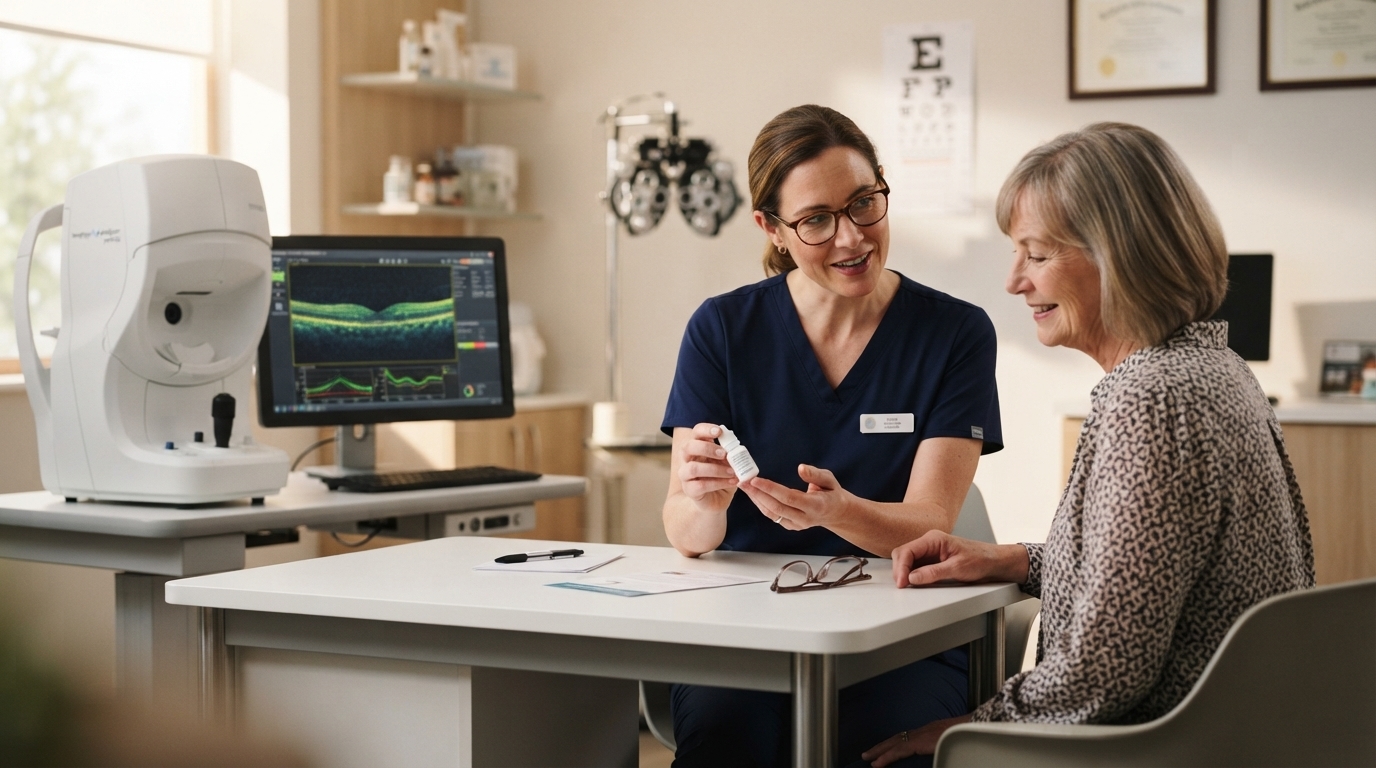
Instead, bring questions to an eye-care professional. Ask whether your pressure is at its target, whether the optic nerve is stable, whether side effects are manageable, and whether your current plan still fits your needs.
You can also review general glaucoma information through the National Eye Institute’s glaucoma resource.
The glaucoma eye drops in 2026 discussion is evolving, and K-911 is one of the most closely watched candidates. The FDA has accepted its application for review, Phase 3 studies support the submission, and additional data are being discussed at major eye-care meetings.
But K-911 is still investigational. It is not yet an FDA-approved glaucoma treatment.
New therapies may expand future choices, but protecting vision today still depends on regular exams, accurate testing, consistent use of prescribed treatment, and timely discussion of side effects or changes.
This article is for general educational purposes only and does not provide medical advice. Do not start, stop, or change glaucoma medication based on online information. Treatment decisions should be made with a qualified eye-care professional who can review your examination findings and medical history.